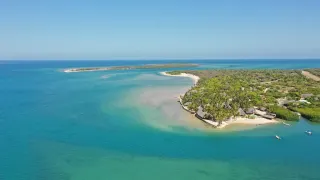
Manda Bay Lodge is a 22-room, family-run retreat on the northern tip of Manda Island in Kenya’s Lamu Archipelago, reached only by boat. Barefoot and low-density, it pairs a quiet Swahili-coast stay with unusually deep conservation work — from a stranded buffalo herd to a reef rebuilt with coral “reef stars.”
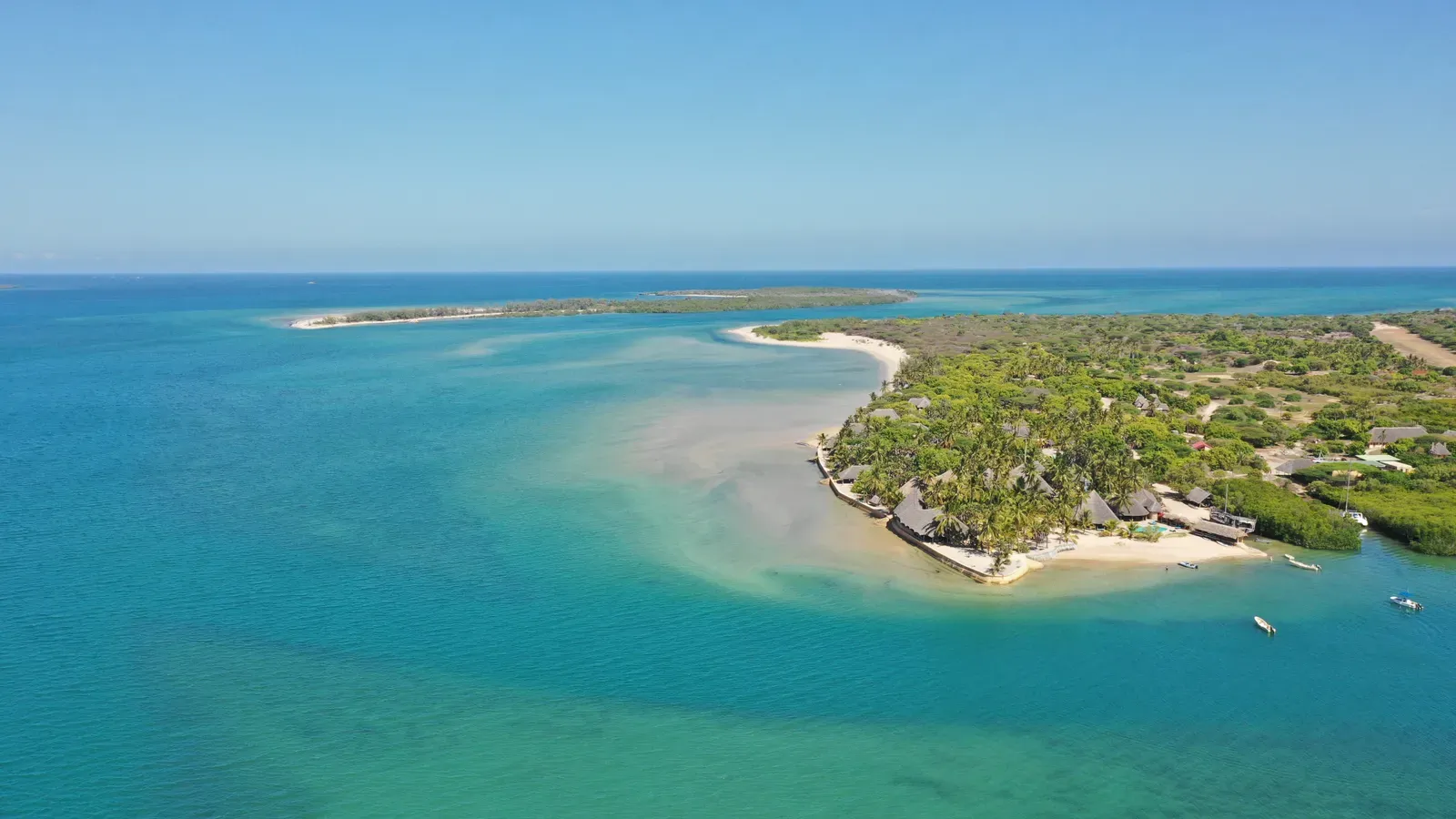
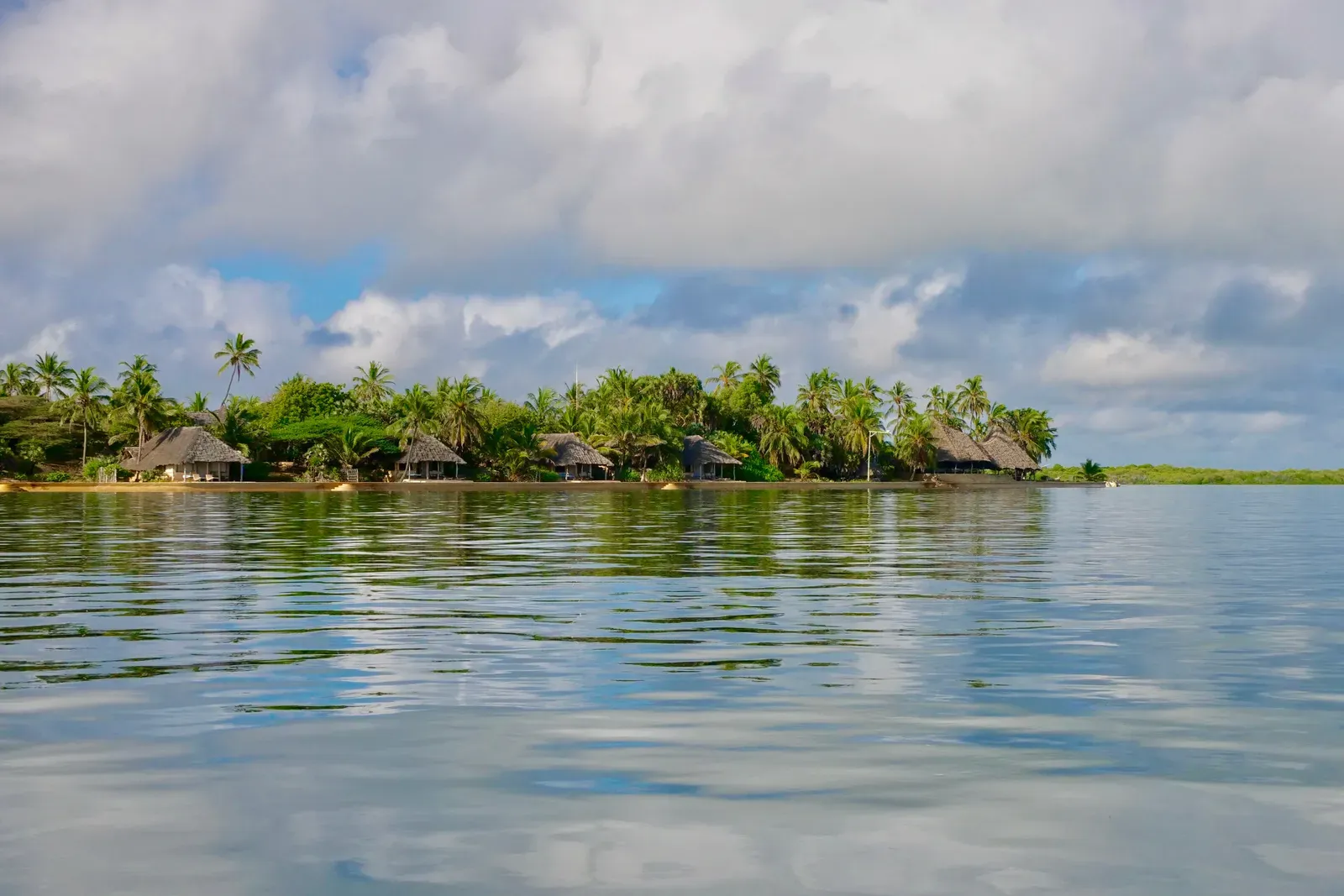
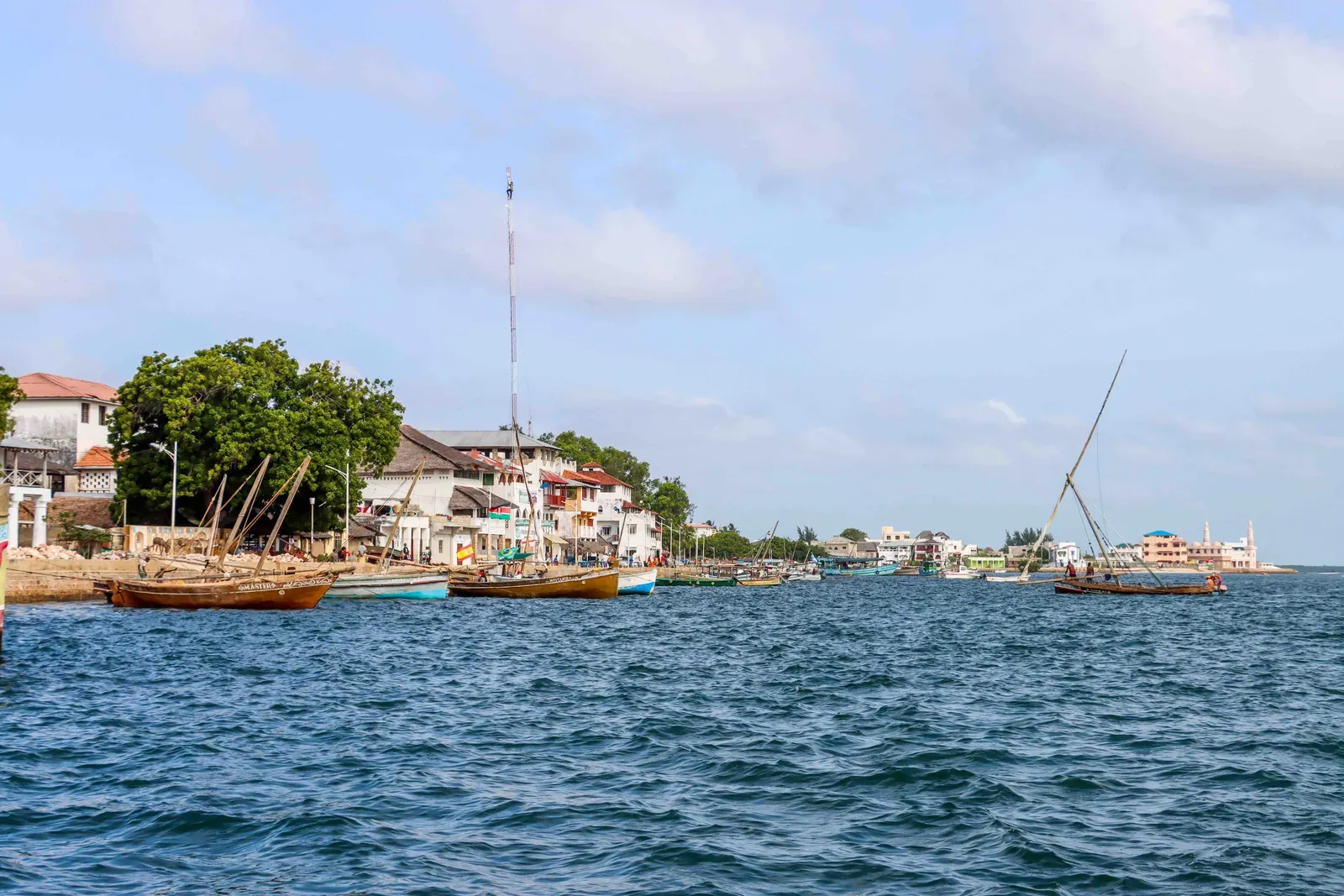
The boat slips out of the narrow mangrove channel and the bay opens in front of you, wide and sheltered, the water glassy in the early heat. A loose line of thatched buildings comes into view, set back among swaying palms and coastal vegetation. This is Manda Bay Lodge, on the northern tip of Manda Island, in Kenya’s Lamu Archipelago — a short channel away from Shela village and the ancient stone alleys of Lamu town, the oldest and best-preserved Swahili settlement in East Africa.
A Low-Density Lodge Built From Palm and Driftwood
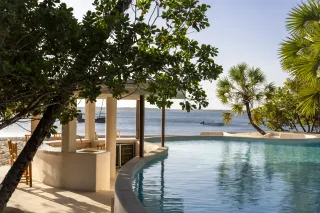
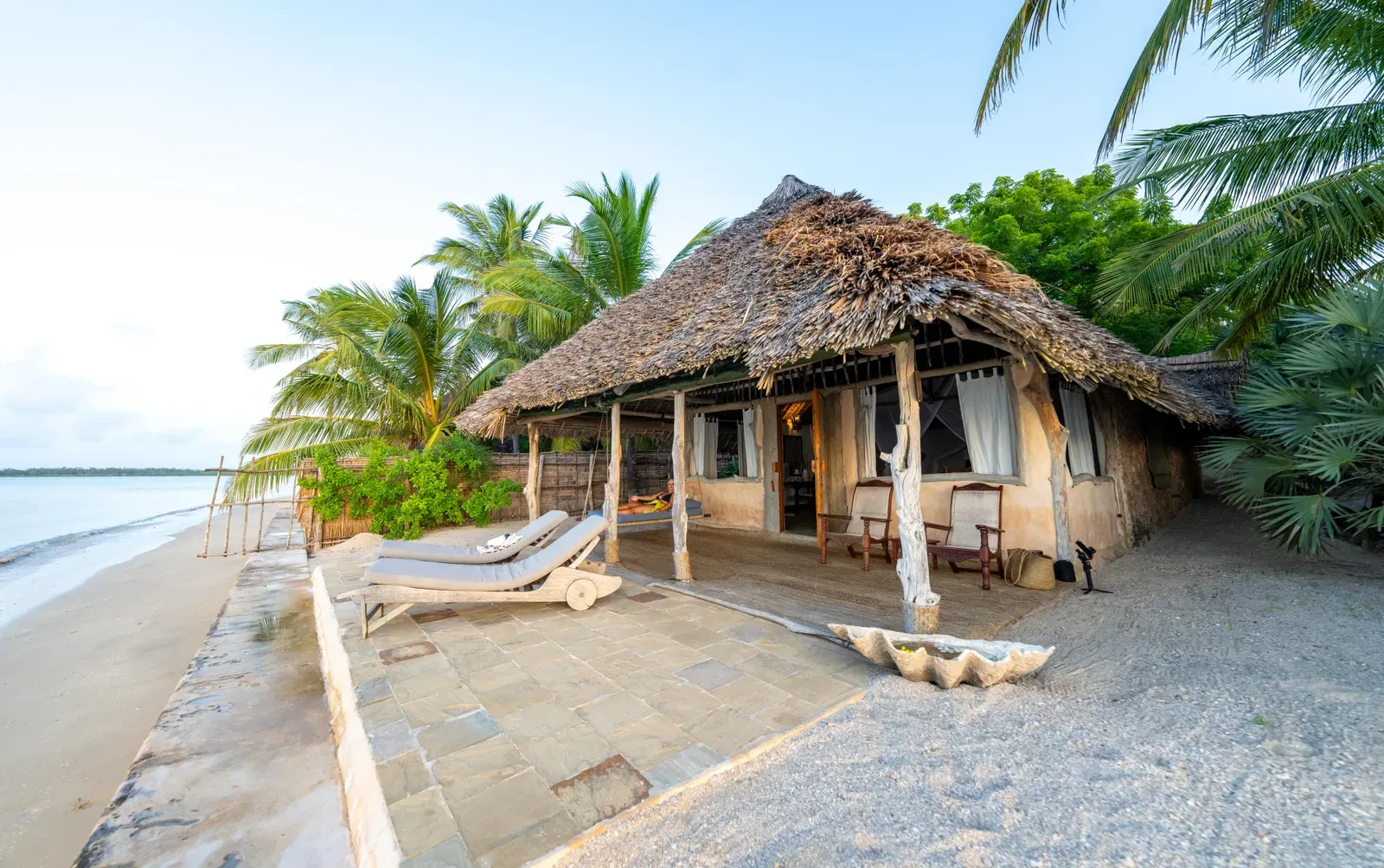
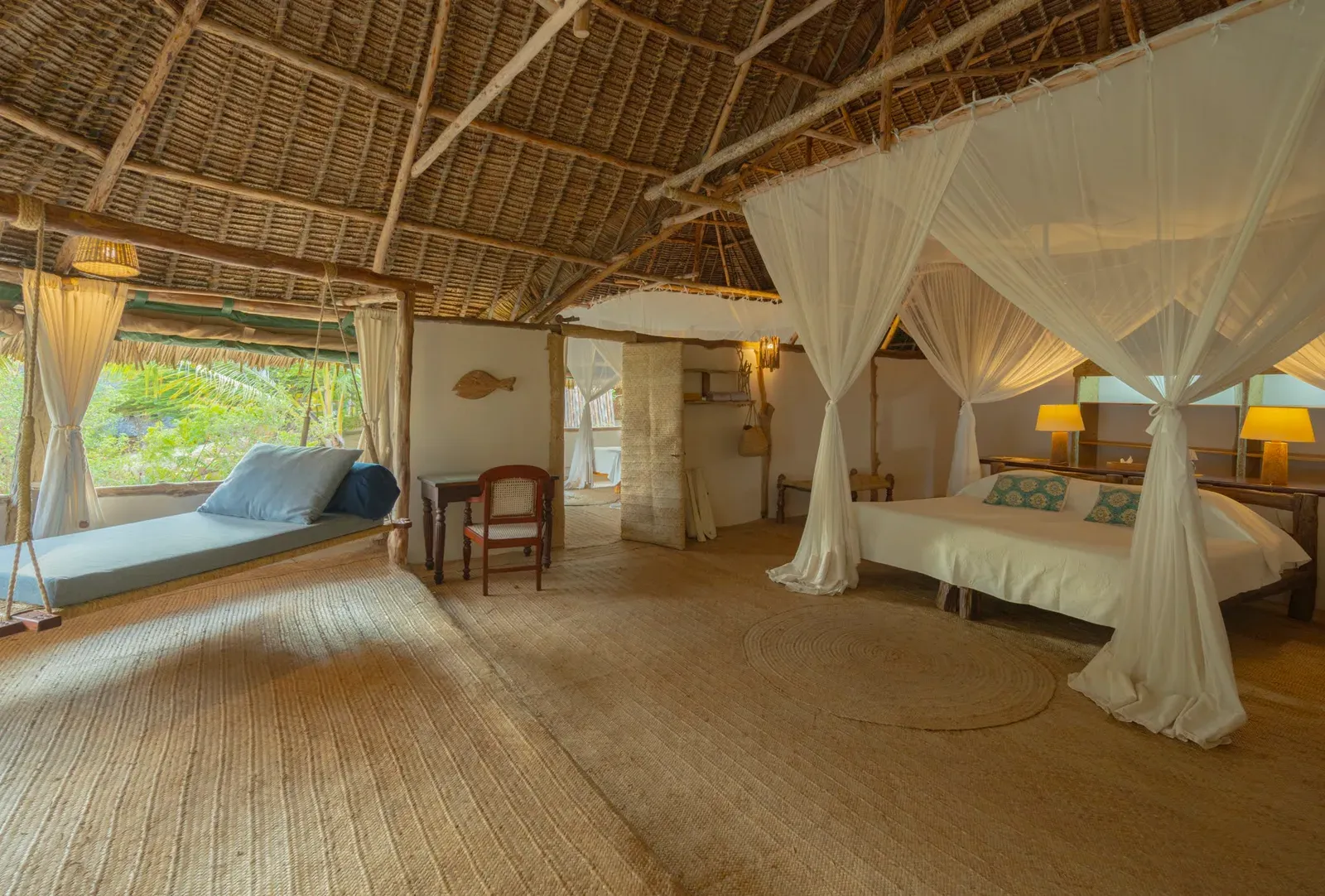
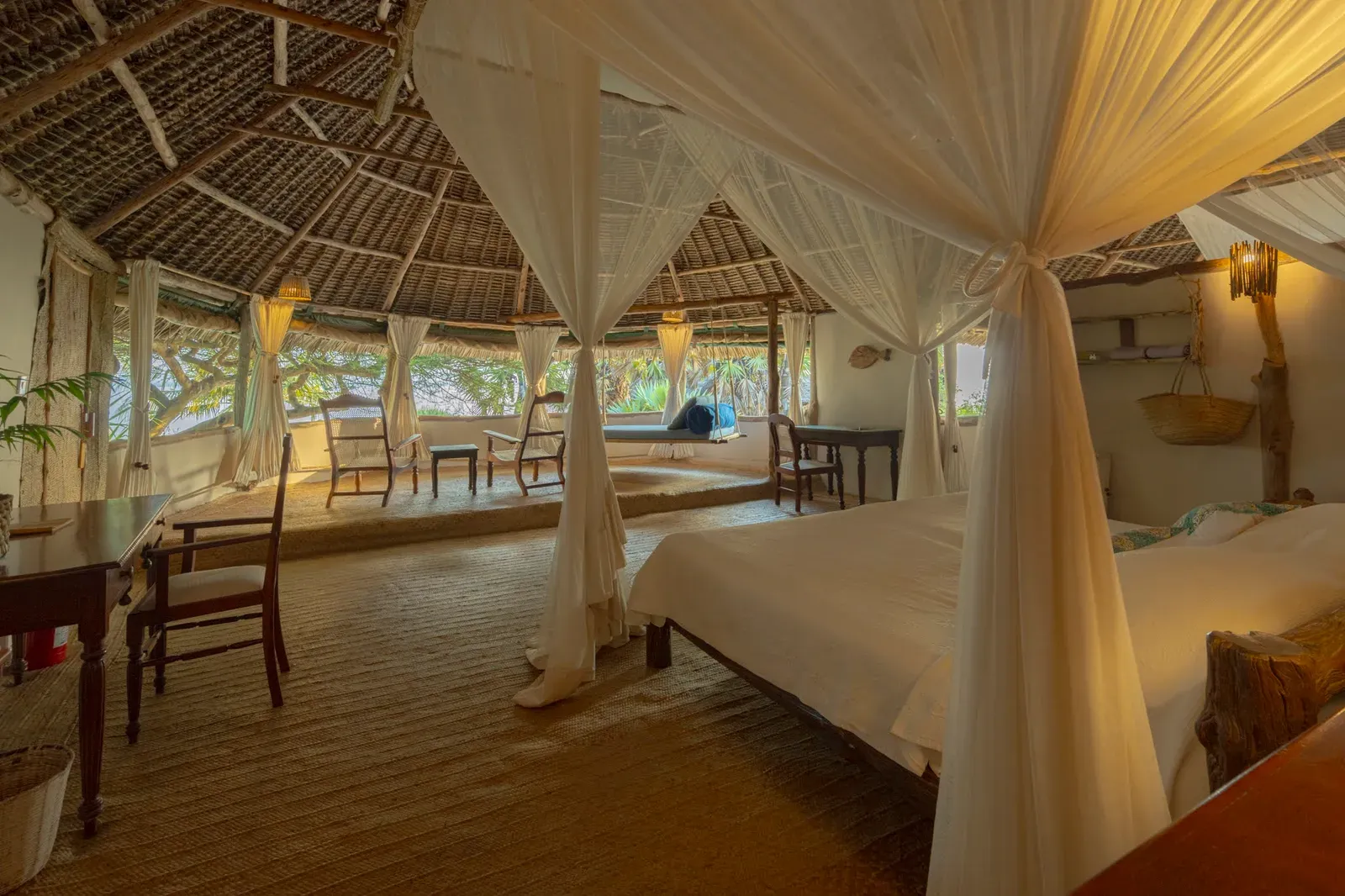
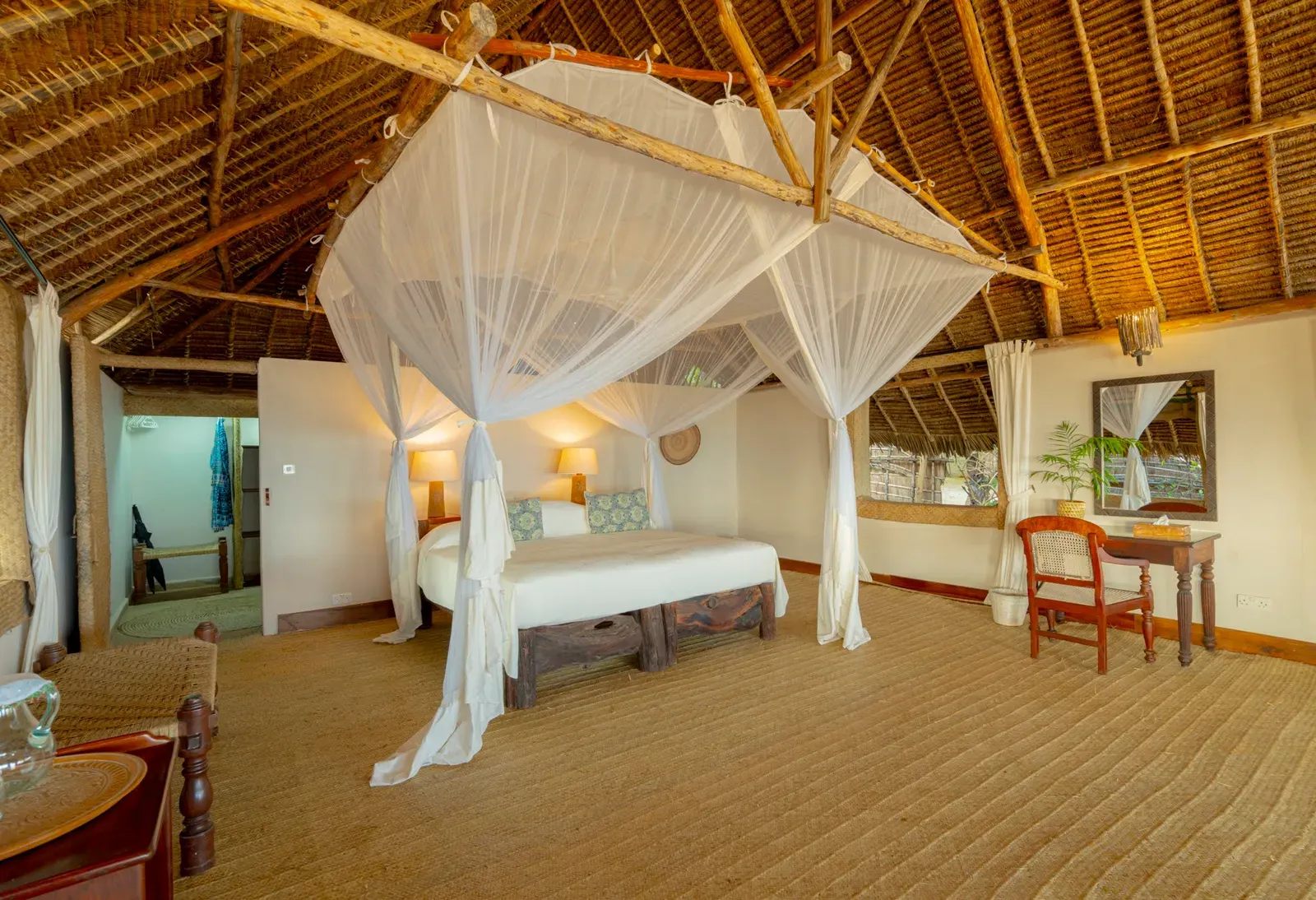
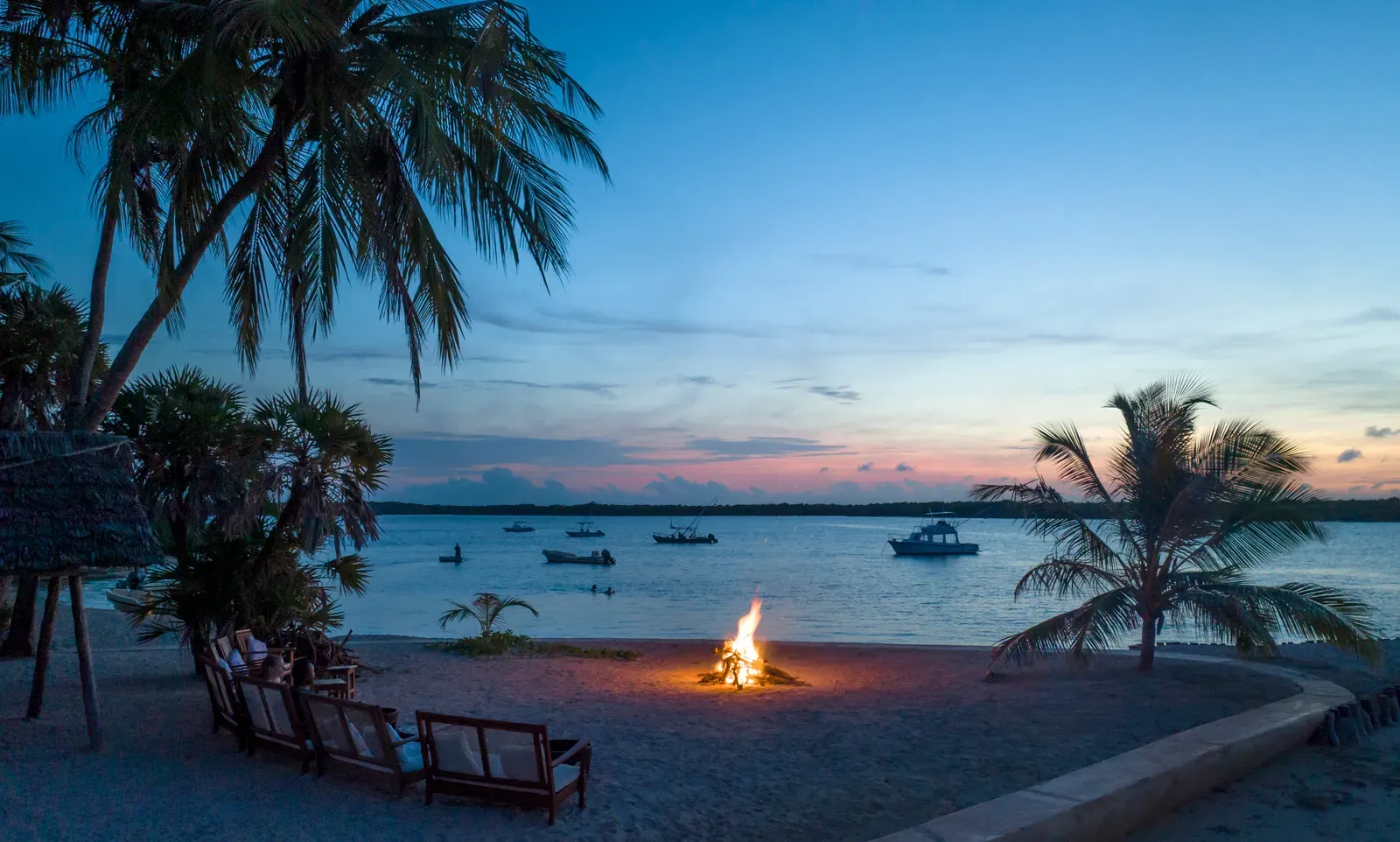
Unlike the more built-up parts of the Kenyan coast, Manda Bay is low-density, calm, and quiet. The lodge is small — 22 guest rooms built from palm, driftwood, and other local materials, half perched on a low sea wall a few steps from the beach, the rest tucked back among tropical vegetation. There is a bar, swimming pool, lounge, dining room, gym, yoga room, and spa, all laid out in a way that keeps the lodge’s footprint, both visual and environmental, deliberately quiet.
At night, the breeze rustles in the thatch, and the gentle sounds of the ocean fill the room. If you wake early enough, you can catch the sunrise — brilliant rays of light that stream from behind the palm trees that grow on the tiny island to the east of Manda Bay. This is the perfect time to take your coffee to the verandah; either to the pair of rustic armchairs, positioned to catch the view, or perhaps to the hanging daybed where you can swing, doze, and contemplate life for a little longer. The beach is only steps away, and depending on your mood, and the tides, you can walk on the sand or swim in the shallow waters that stretch out in front of the lodge.
Manda Bay is family-run, and small by design. Twenty-two rooms is not a number you arrive at by accident on a coastline where bigger has long been the default; it is a number you defend. The result is a place that feels almost private — and quietly, when you start paying attention, one of the more ambitious conservation projects on the East African coast.
The Stranded Buffalo Herd Manda Bay Keeps Alive
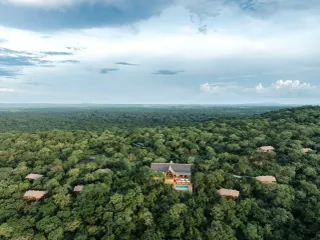
The island itself is the surprise. Dry coastal bush rolls into mangrove, mangrove into open grazing, and somewhere out in the middle of all that is a resident herd of buffalo that should not, by rights, still be here. Once free to move between the mainland and the island, the herd was cut off when development closed their old migration channels — and stranded on a piece of land too small, in dry seasons, to feed and water them.
Credit: Manda Bay Lodge
So the lodge looks after them. More than 500 gallons of desalinated water are pumped out for the herd each day in the dry season — the same water the kitchen uses. Food is supplemented when the grazing thins. A vet visits for deworming. Without it, the herd would not make the year. It is the kind of daily commitment that does not show up on a website, and it is one of the most quietly extraordinary things about this place.
The rest of the cast wanders into view as you walk: dik-diks no bigger than house cats, bushbuck moving in and out of the shade, baboons and vervet monkeys with the run of the place, the occasional civet or genet at dusk. More than 100 bird species use the island, including the near-endemic Manda boubou, found in only a thin sliver of this coast.
Manda Island is one of the last fragments of the East African Coastal Forest, a global biodiversity hotspot where more than 43 percent of the plant species exist nowhere else on earth — context that explains, more than anything, why the lodge has thrown its weight behind a 17,000-acre conservation partnership covering the island and its mangrove fringe.
Credit: Manda Bay Lodge
Related on Green Lodging Guide
 Sarah Kingdom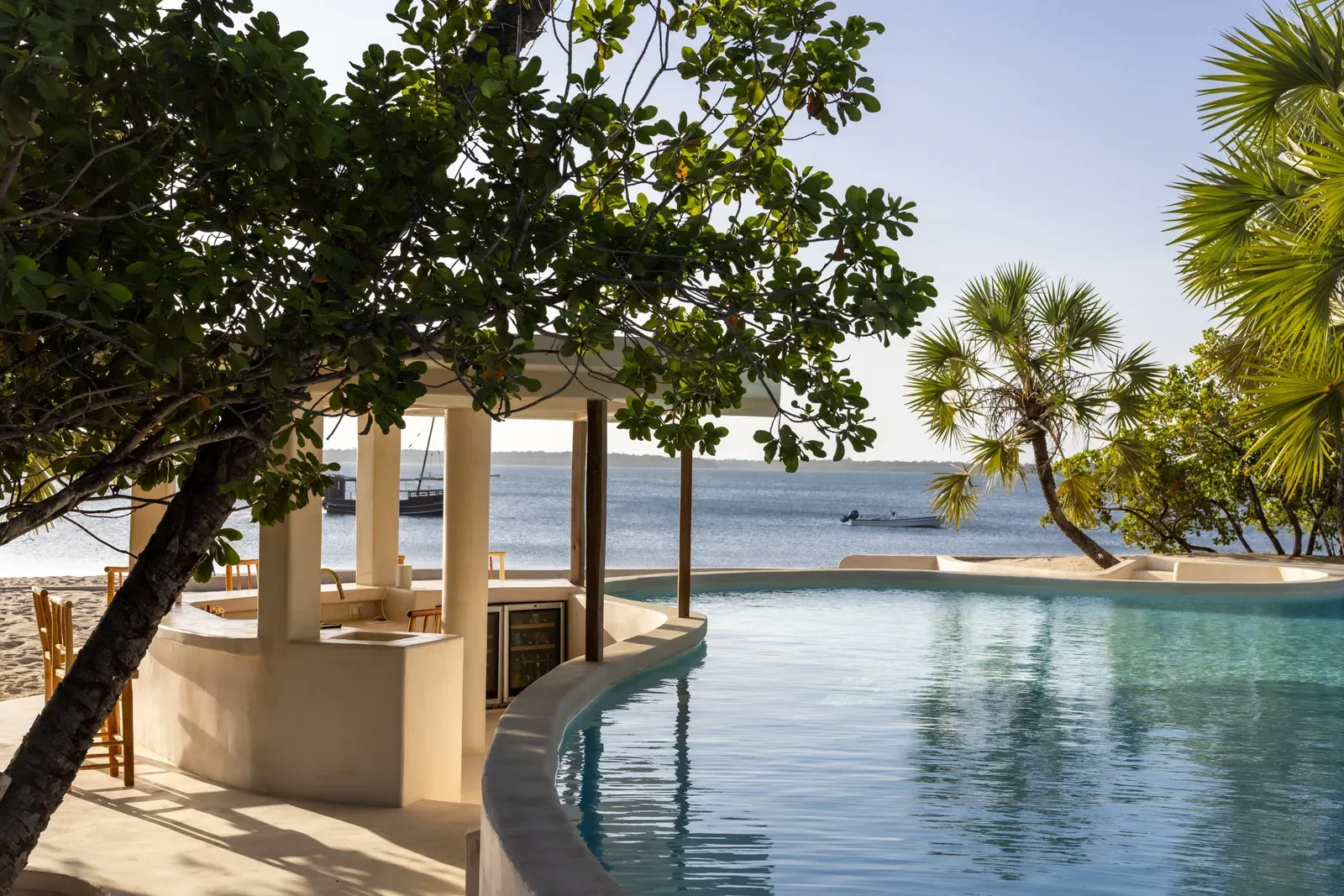
Restoring the Reef, One Reef Star at a Time
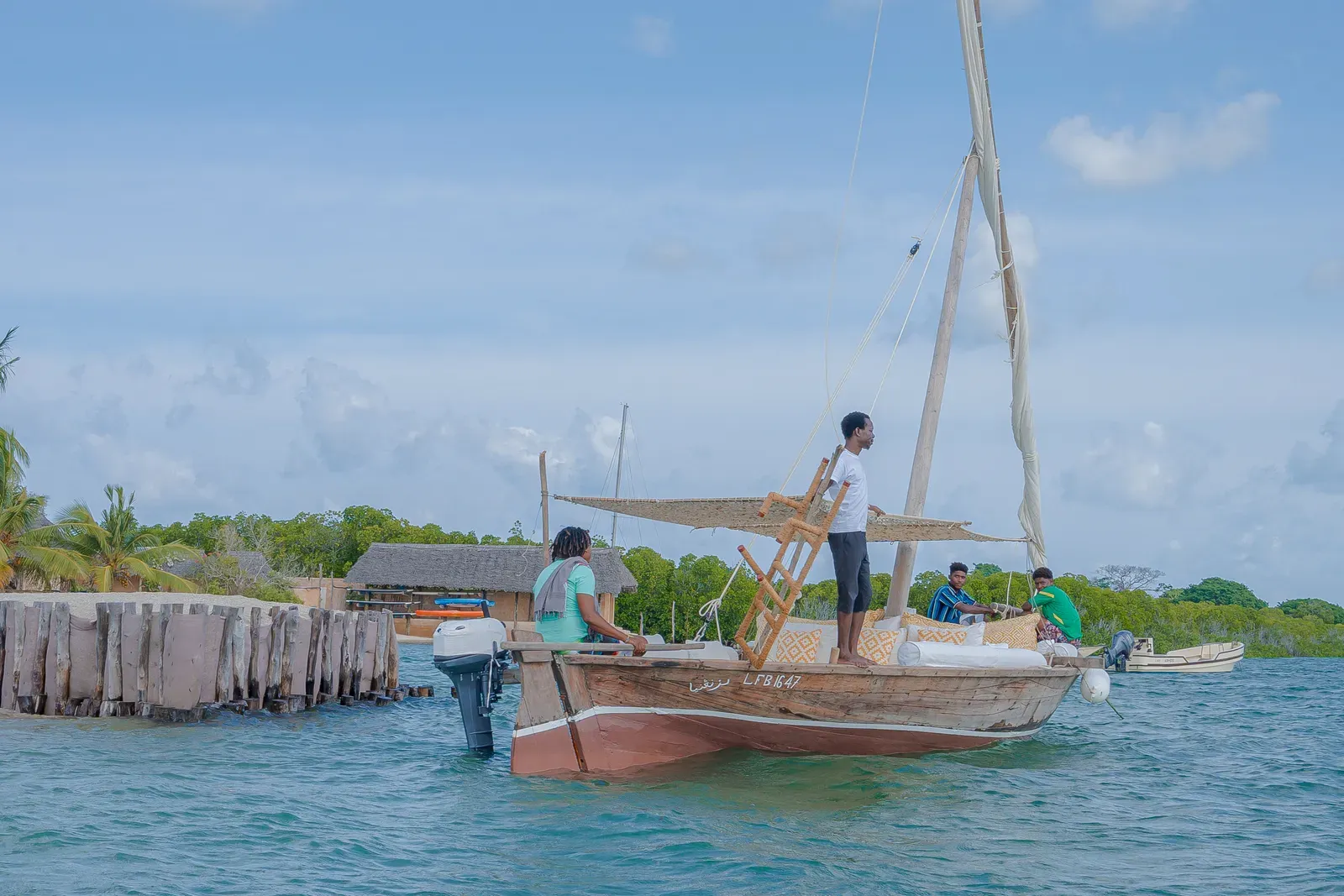
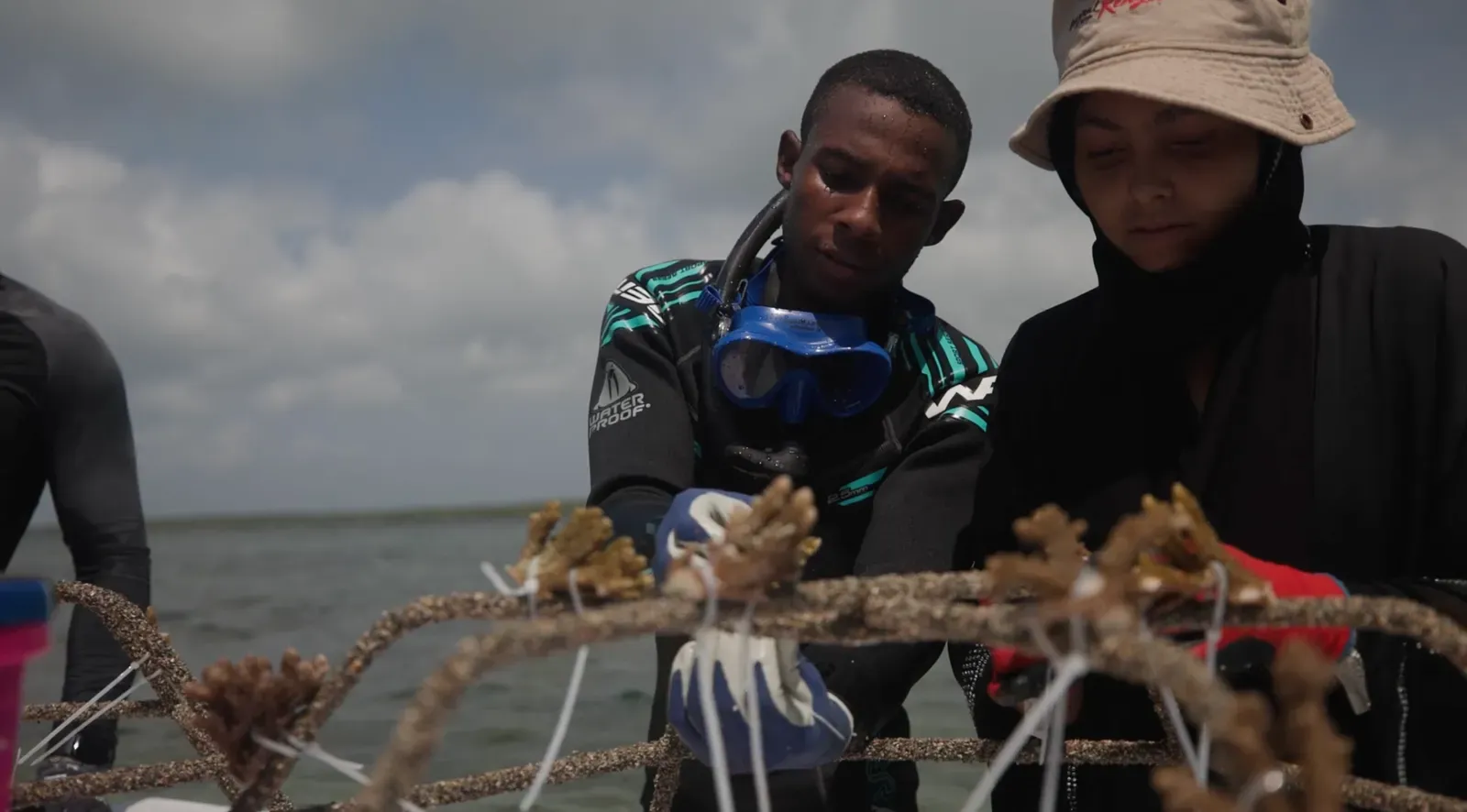
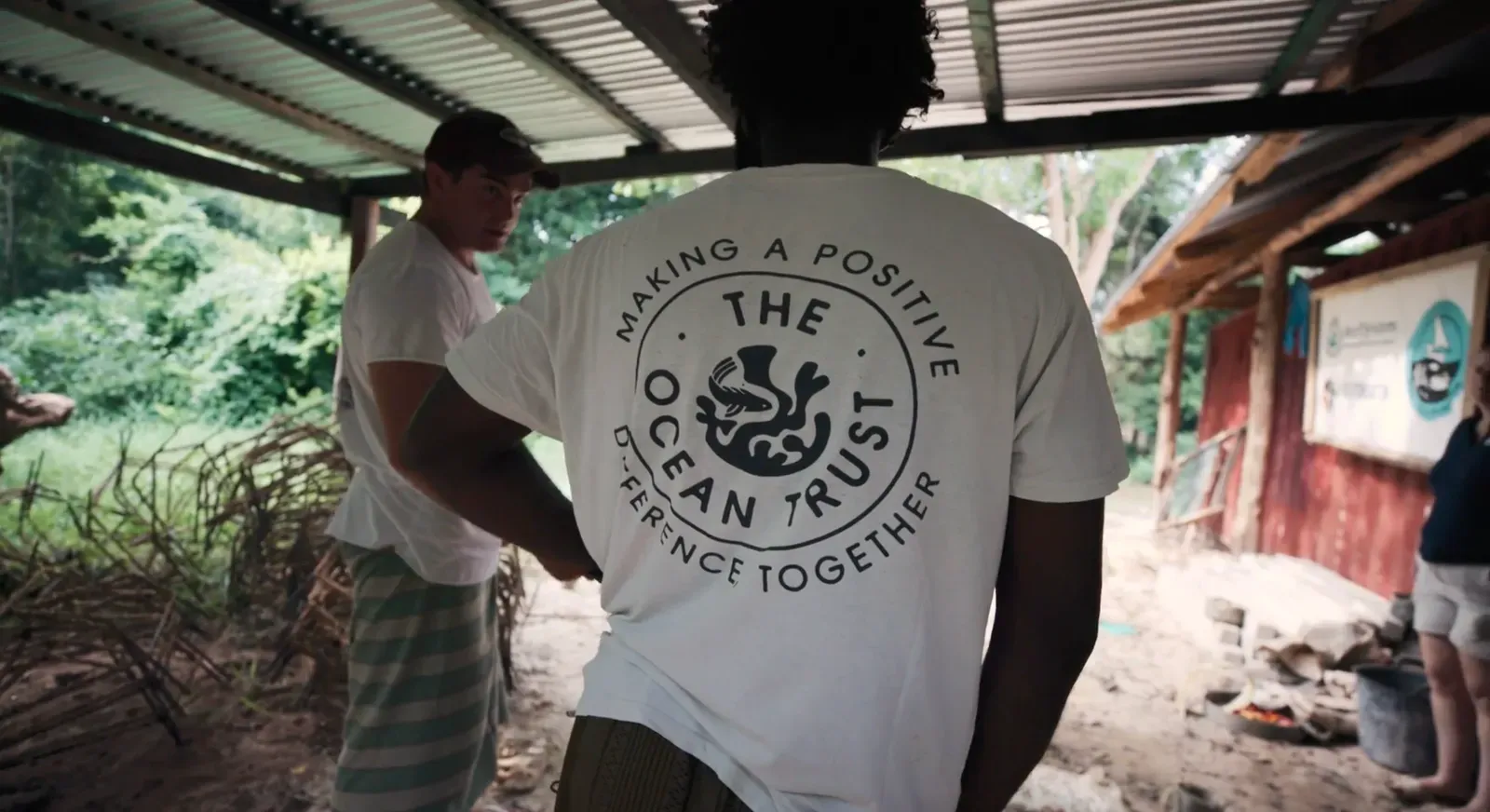
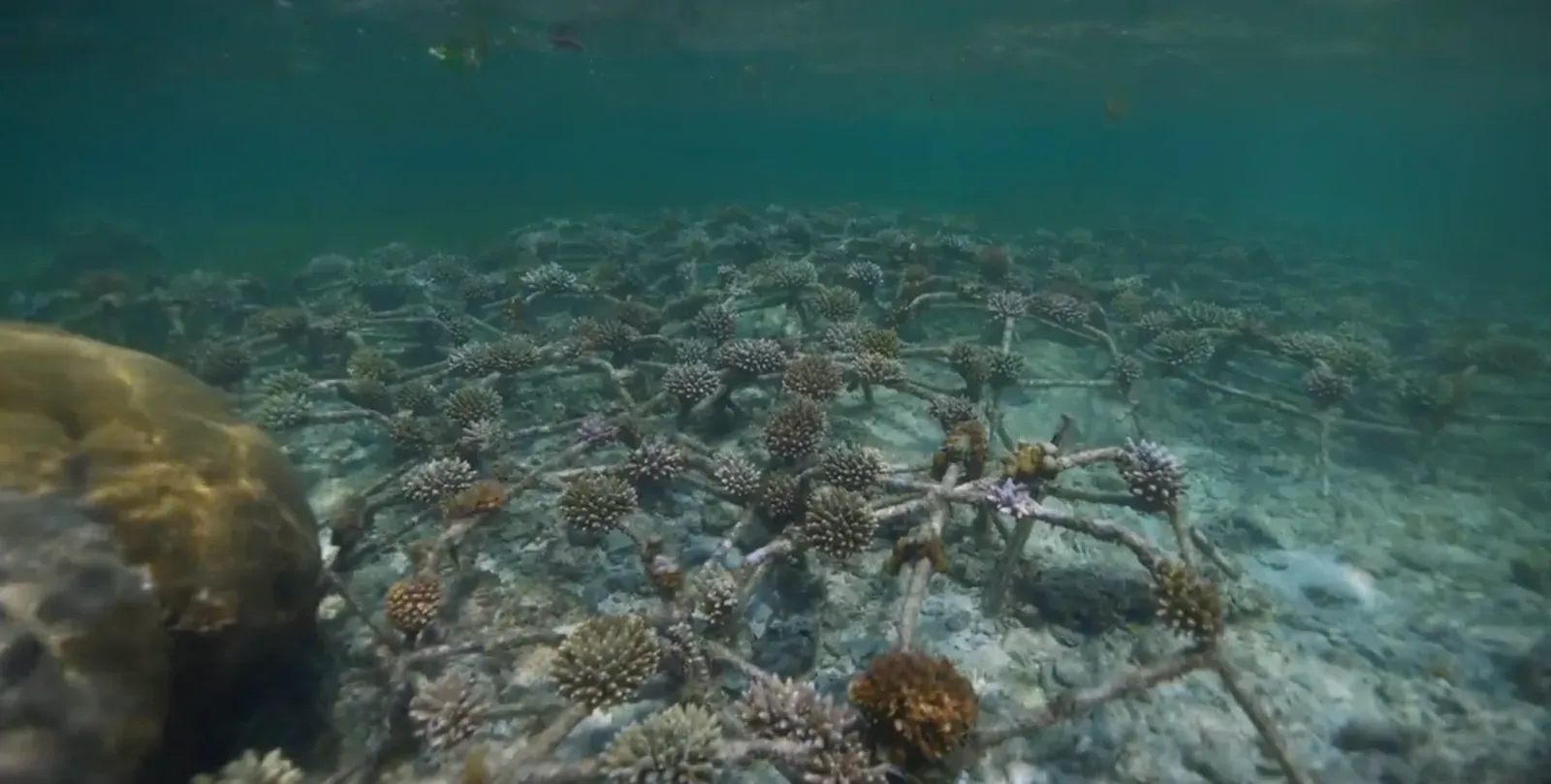
The water around the lodge tells the same story. Sliding off the side of a dhow with a mask on, you can see them: low metal structures studded across the seabed, each one a frame for new coral. They are called reef stars, and more than 120 of them have been seeded into the reef off Manda Bay so far, in partnership with The Ocean Trust, whose six pilot restoration sites stretch up and down this coast. Guests can swim out and see what the next reef looks like before it is one.
Manda Bay is honest about its trade-offs. Remote-coast tourism is not a clean equation, and the lodge does not pretend otherwise. What it does, instead, is the work.
On the last evening, the buffalo come down to the water as the light goes copper, and the dhow that took us out to the reef stars sails back in past them, sails the color of wet sand. The water, the herd, the boat, the silence between them — none of it would still be here, in this configuration, without the lodge. That is the thing worth flying to Lamu to see.
Credit: Manda Bay Lodge
The Green Scene
Manda Bay’s conservation footprint runs further than most. The lodge runs primarily on solar, with backup generators that rarely turn on, and its own desalination plant supplies fresh water without drawing from Manda Island’s already thin reserves — including the more than 500 gallons a day that go to the resident buffalo herd. The lodge operates without single-use plastics; recyclables go to a Lamu facility, glass is reused, and organic waste is composted back into the gardens.
Seafood on the menu is sourced locally with strict attention to species and size, in a region where overfishing is a real and present threat to coastal livelihoods. A ranger team patrols the island year-round, lifting poachers’ snares, monitoring wildlife, and clearing invasive species in favor of native grasses.
Beyond the lodge fence, Manda Bay is the anchor partner of the Manda Conservancy, working to protect 17,000 acres of the island and roughly 5,500 acres of mangrove, and developing an education center to train local people in land and marine resource management. Offshore, the lodge supports The Ocean Trust’s coral restoration network — six pilot sites along the Kenyan coast — with more than 120 reef stars now seeded in the waters off Manda. Most of the staff are local; most of the suppliers are too. The lodge does not call any of this perfect, and it is the better for not pretending otherwise.
Frequently Asked Questions
Where is Manda Bay Lodge?
Manda Bay Lodge sits on the northern tip of Manda Island in Kenya’s Lamu Archipelago, a short boat channel from Shela village and Lamu town — the oldest and best-preserved Swahili settlement in East Africa. Like everywhere in the archipelago, it’s reached by boat.
How many rooms does Manda Bay have?
The lodge is small and family-run — just 22 guest rooms built from palm, driftwood, and other local materials, half perched on a low sea wall steps from the beach and the rest tucked into tropical vegetation. It also has a bar, pool, lounge, dining room, gym, yoga room, and spa.
What conservation work does Manda Bay support?
Manda Bay is the anchor partner of the Manda Conservancy, helping protect 17,000 acres of island and roughly 5,500 acres of mangrove. It cares for a stranded resident buffalo herd, supports The Ocean Trust’s coral “reef star” restoration (more than 120 seeded so far), runs primarily on solar with its own desalination plant, and operates without single-use plastics.
What wildlife might I see on Manda Island?
Alongside the resident buffalo herd, the island is home to dik-diks, bushbuck, baboons, vervet monkeys, and the occasional civet or genet. More than 100 bird species use the island, including the near-endemic Manda boubou.
Most Popular Posts