
Pabidi Lodge has opened in the Kaniyo Pabidi sector of Uganda’s Budongo Forest, 10 minutes from chimpanzee tracking trails in a rainforest holding more than 600 wild chimpanzees and 360 bird species. Luxury tented suites with floor-to-ceiling windows open onto the canopy, and the savannah of Murchison Falls National Park is within easy reach.
The first thing I heard was not a chimpanzee, but the sounds of the forest itself. It was early morning in Uganda’s Budongo Forest, and the air was heavy with moisture beneath a canopy of giant mahogany trees. Sunlight struggled to reach the forest floor. Somewhere overhead, black-and-white-casqued hornbills shouted in the canopy, while black-and-white colobus monkeys and red-tailed monkeys crashed through the branches.
Then came an unmistakable sound. Distant grunts, pant-hoots, and screeches echoed through the forest. My guide, Godfrey Musinguzi, motioned for me to stand still while we listened. After a few minutes of silence, we moved forward again, stepping carefully through tangled roots and dense undergrowth before emerging into a small clearing beneath towering mahogany trees. And there they were.
A family of wild chimpanzees moved slowly through the canopy above. An adult female sat quietly feeding on wild figs, while a juvenile swung through the branches with astonishing confidence. Another chimp descended to the forest floor before disappearing into the undergrowth. For nearly an hour, we watched as one of humanity’s closest relatives went about its daily life, in one of Africa’s most important rainforest ecosystems. It’s experiences like this that have made Budongo Forest one of Uganda’s premier primate destinations. Now, the opening of Pabidi Lodge is transforming the way travelers can experience this remarkable corner of East Africa.
Located deep within the Kaniyo Pabidi sector of Budongo Forest, the newly opened eco-lodge combines a level of comfort previously unavailable in this part of Uganda with conservation-focused tourism. Positioned just minutes from some of the country’s most successful chimpanzee tracking trails, Pabidi Lodge is poised to become one of Uganda’s most significant new safari destinations.
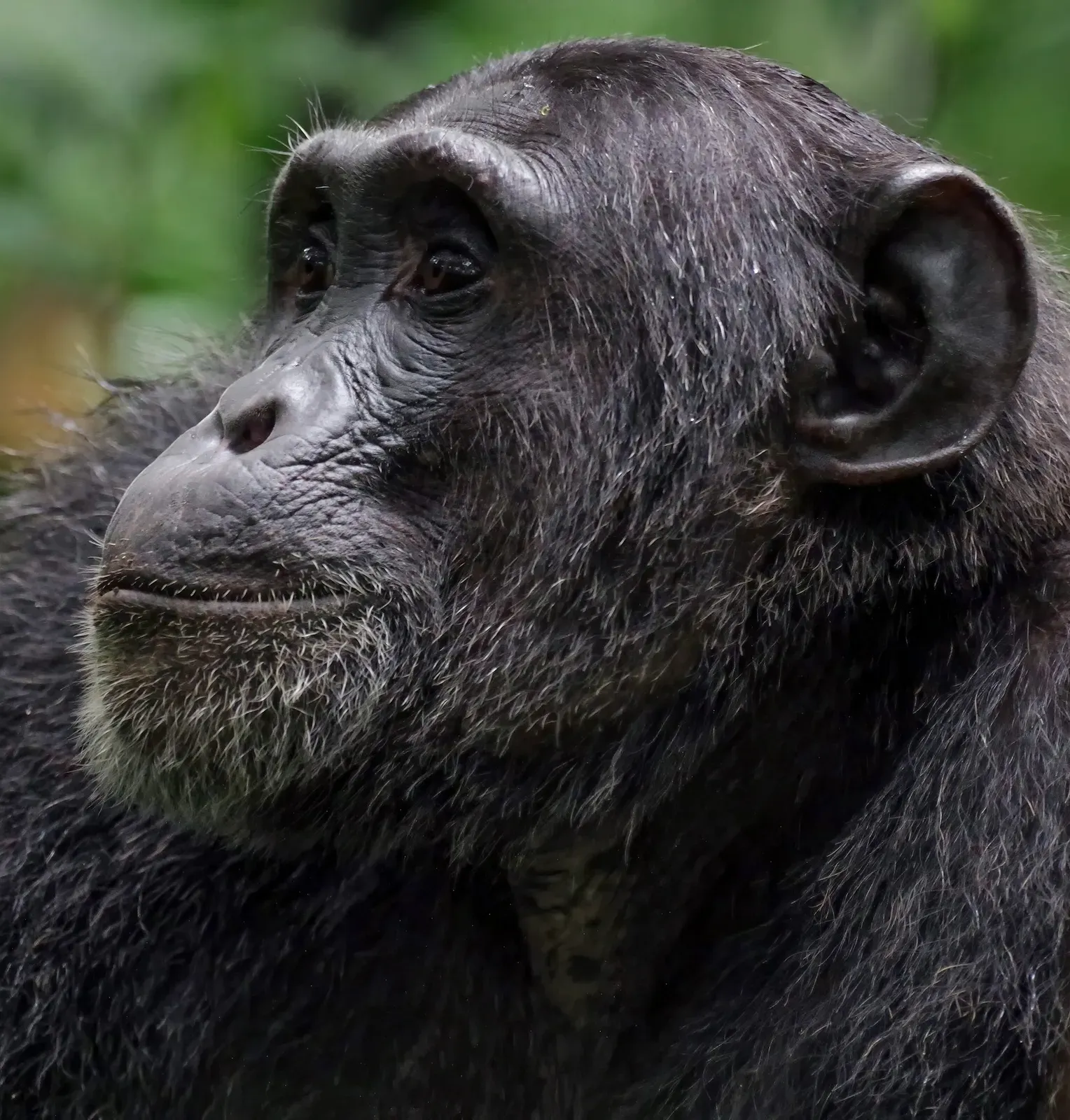
Budongo Forest: Uganda’s Ancient Rainforest
While Uganda is best known internationally for mountain gorilla trekking in Bwindi Impenetrable National Park, Budongo Forest remains one of the country’s most underrated natural treasures.
Covering approximately 320 square miles, Budongo is the largest remaining natural tropical forest in Uganda. It’s home to nine different primate species, including four distinct diurnal monkeys, large baboon troops, various nocturnal prosimians (bushbabies among them), and a massive population of wild chimpanzees. The forest forms part of the greater Murchison Falls ecosystem and protects a globally important biodiversity hotspot characterized by towering mahogany trees, ironwood forests, and an intricate network of wildlife habitats.
The forest’s incredible age is immediately obvious. Some trees soar more than 160 feet above the forest floor, creating an immense canopy that turns sunlight into shifting, dappled green patterns on the ground below. Walking through Budongo feels nothing like the savannah landscapes for which much of East Africa is famous.
For birdwatchers, the forest is a paradise. More than 360 bird species have been recorded in Budongo, among them two regional endemics found nowhere else in East Africa: the yellow-footed flycatcher and Puvel’s illadopsis. Butterflies, reptiles, and countless insect species contribute to an ecosystem that remains one of the most biologically diverse in East Africa.
Yet despite its great ecological significance, Budongo has historically remained somewhat overshadowed by Uganda’s gorilla destinations. That is beginning to change, as travelers start to seek experiences that combine wildlife encounters with meaningful conservation outcomes.
Credit: Pabidi Lodge
The Chimpanzees That Draw Travelers from Around the World
Budongo’s greatest stars are undoubtedly its chimpanzees. The forest is home to more than 600 chimpanzees and is considered Uganda’s second most important chimpanzee habitat after Kibale National Park. In the Kaniyo Pabidi sector, years of habituation work now mean that visitors can observe the chimps while minimizing disturbance to their natural behavior.
Unlike gorilla trekking, where visitors often hike for several hours through mountainous terrain, chimpanzee tracking offers a different kind of primate experience. The animals are highly mobile, vocal, and social. Encounters often involve watching individuals move rapidly through the forest canopy while communicating through a range of calls, gestures, and displays.
The tracking experience itself is dynamic and often unpredictable. One moment you may be quietly observing a mother and infant feeding in a fig tree. The next, a dominant male may announce his presence with a dramatic pant-hoot that reverberates through the forest.
Researchers continue to study Budongo’s chimpanzee communities, making the forest one of Africa’s most important sites for understanding primate behavior, ecology, and conservation. For travelers, that decades-long research presence means unusually reliable sightings.
Pabidi Lodge: A New Benchmark for Eco-Luxury in Northern Uganda
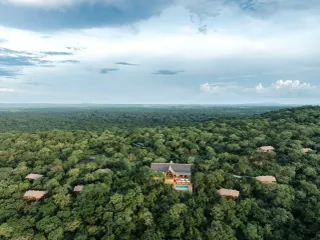
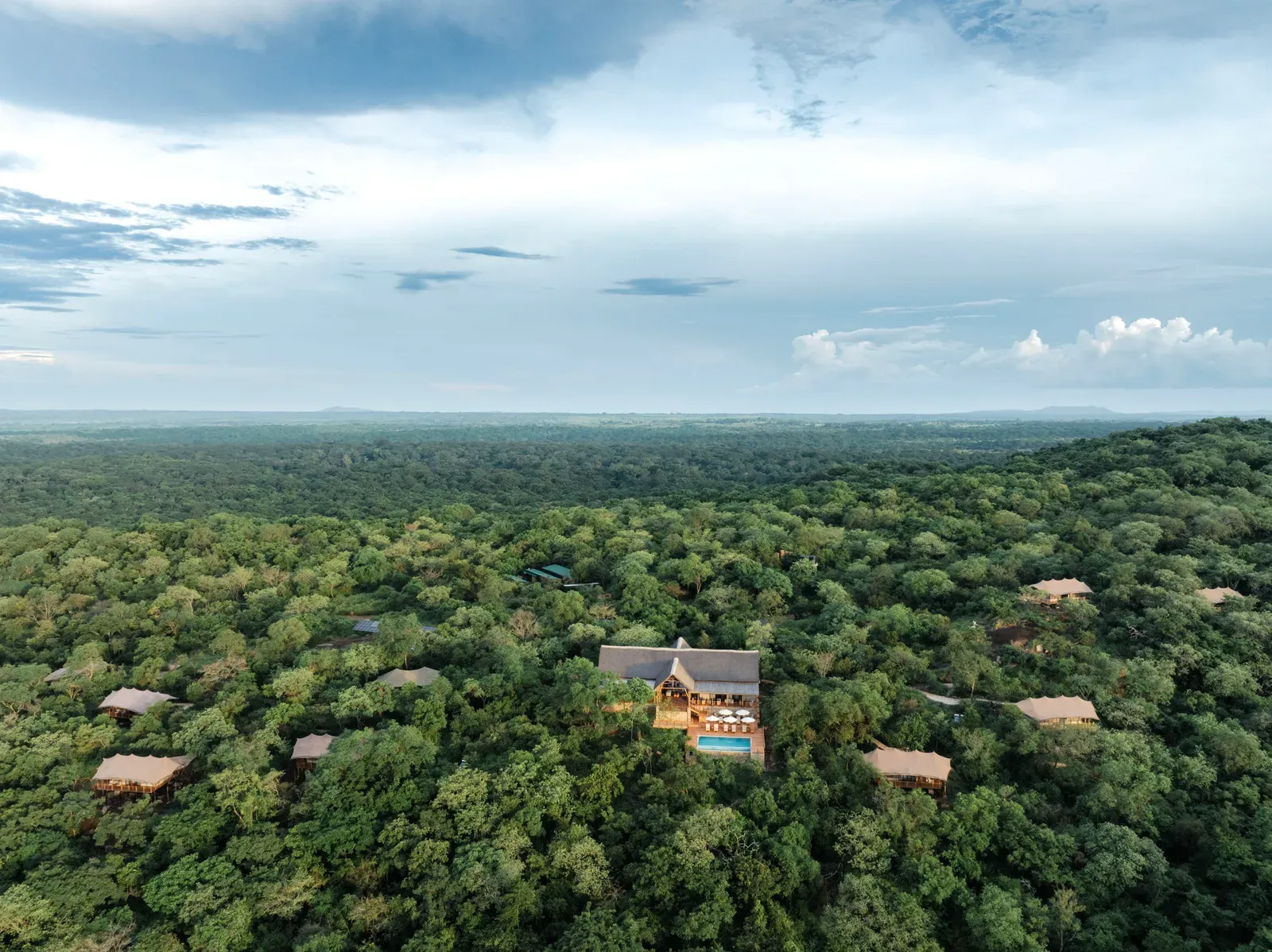
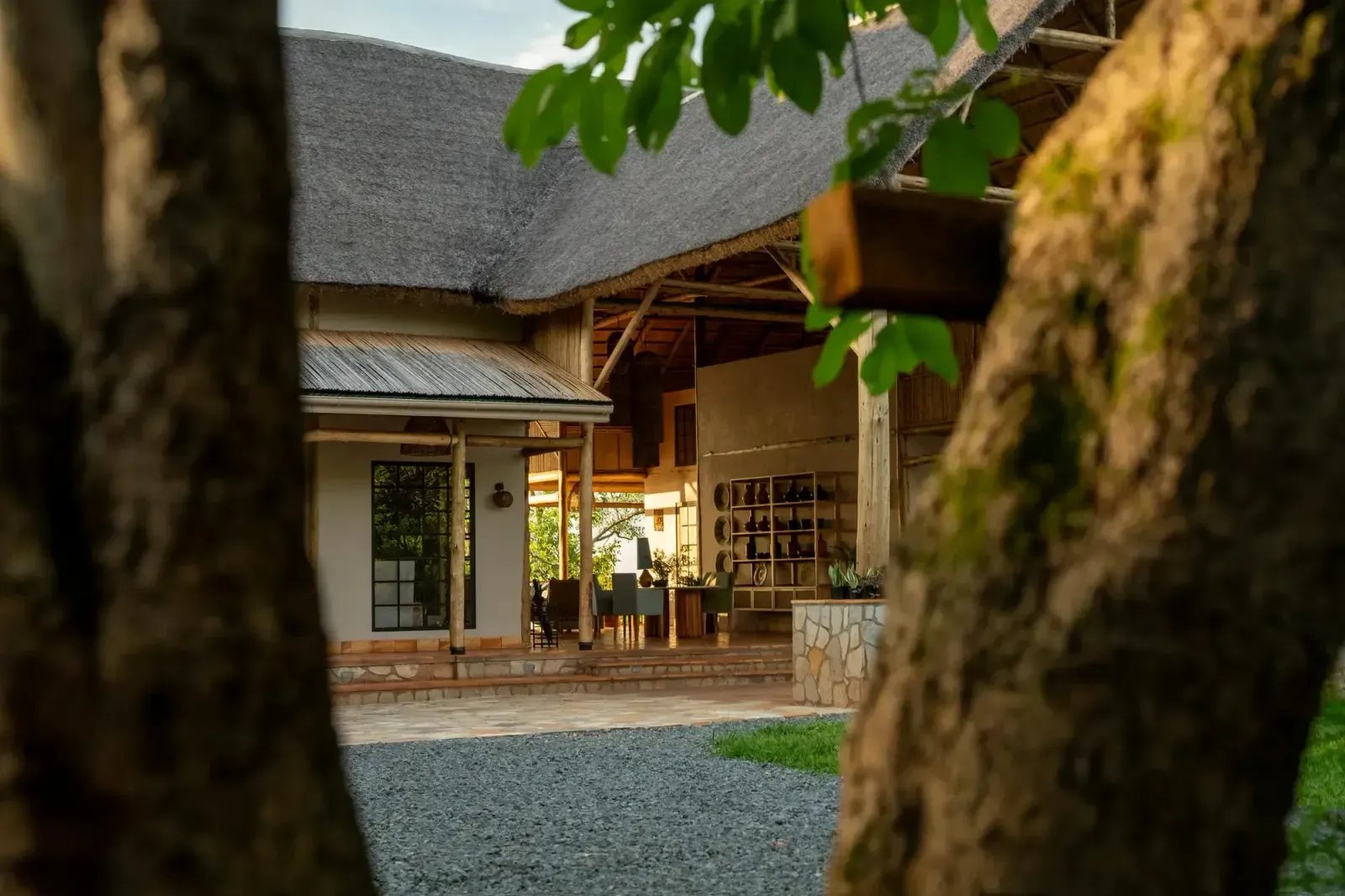
Pabidi Lodge sits within the Kaniyo Pabidi sector of Budongo Forest, on the edge of Murchison Falls National Park — a location unlike any other high-end property in the region, placing guests directly inside the rainforest rather than at the edge of it. Its architecture blends into the surrounding trees instead of announcing itself above them. The emphasis was never on bringing luxury to this landscape, but on building something that feels part of it.
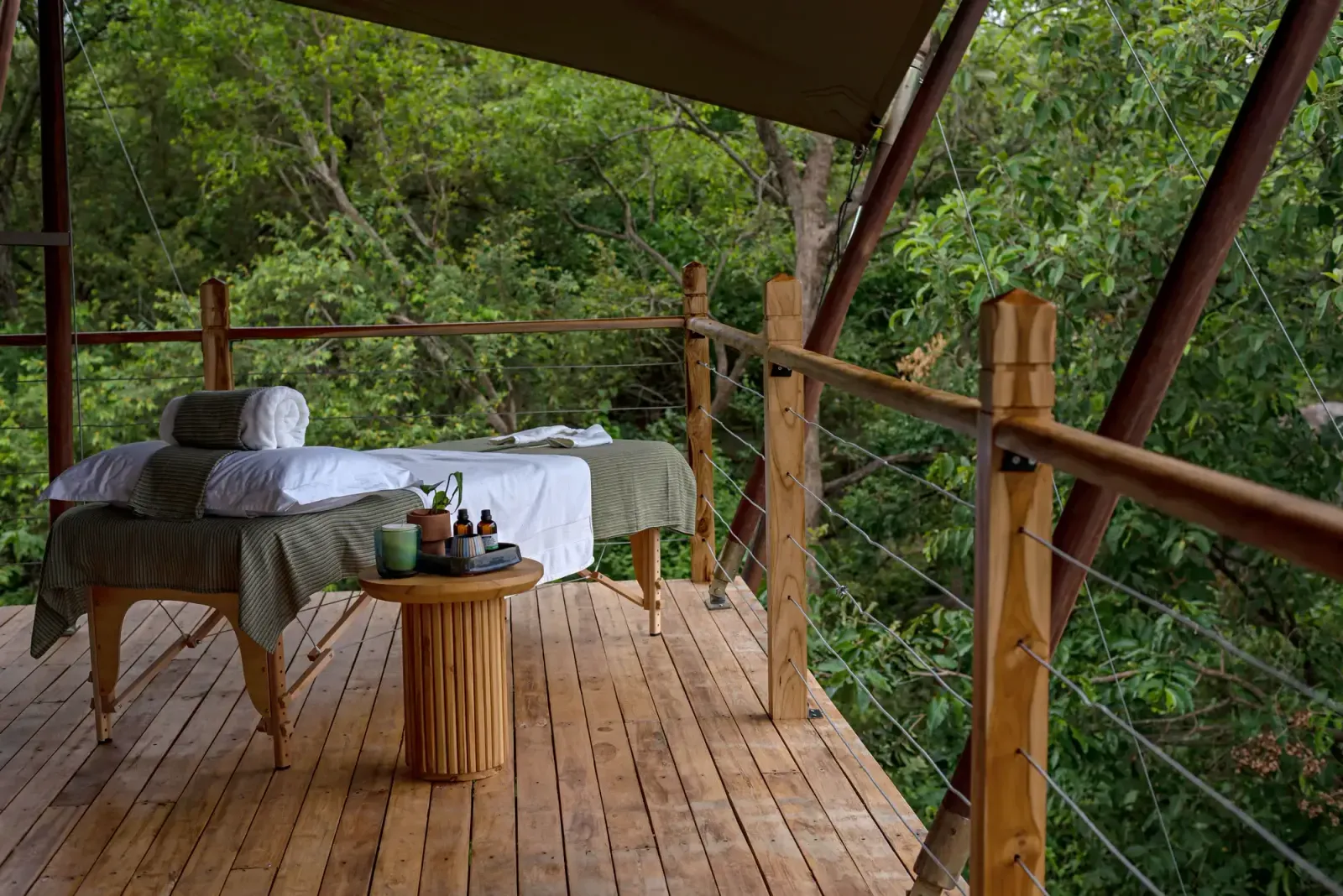

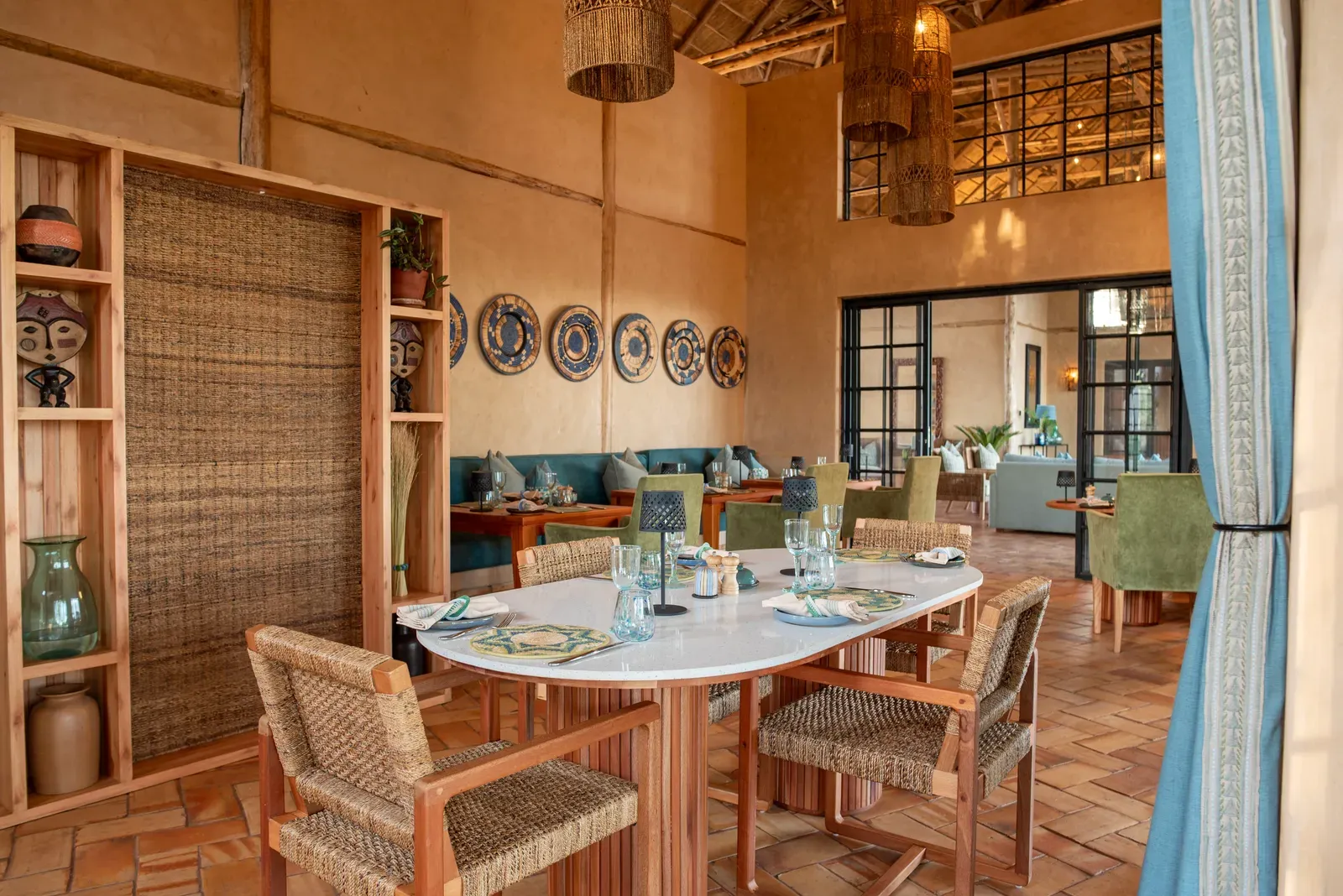
Credit: Pabidi Lodge
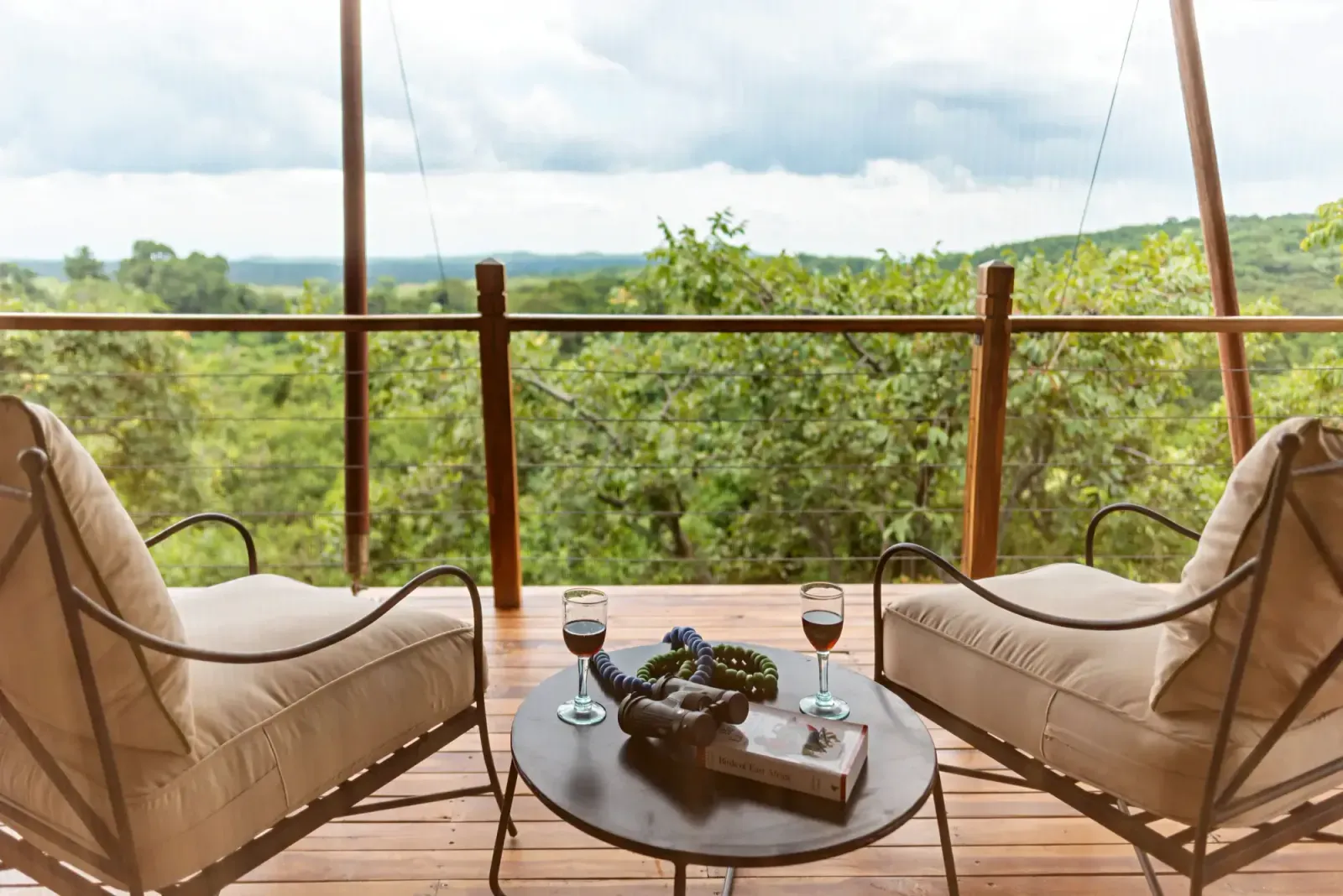
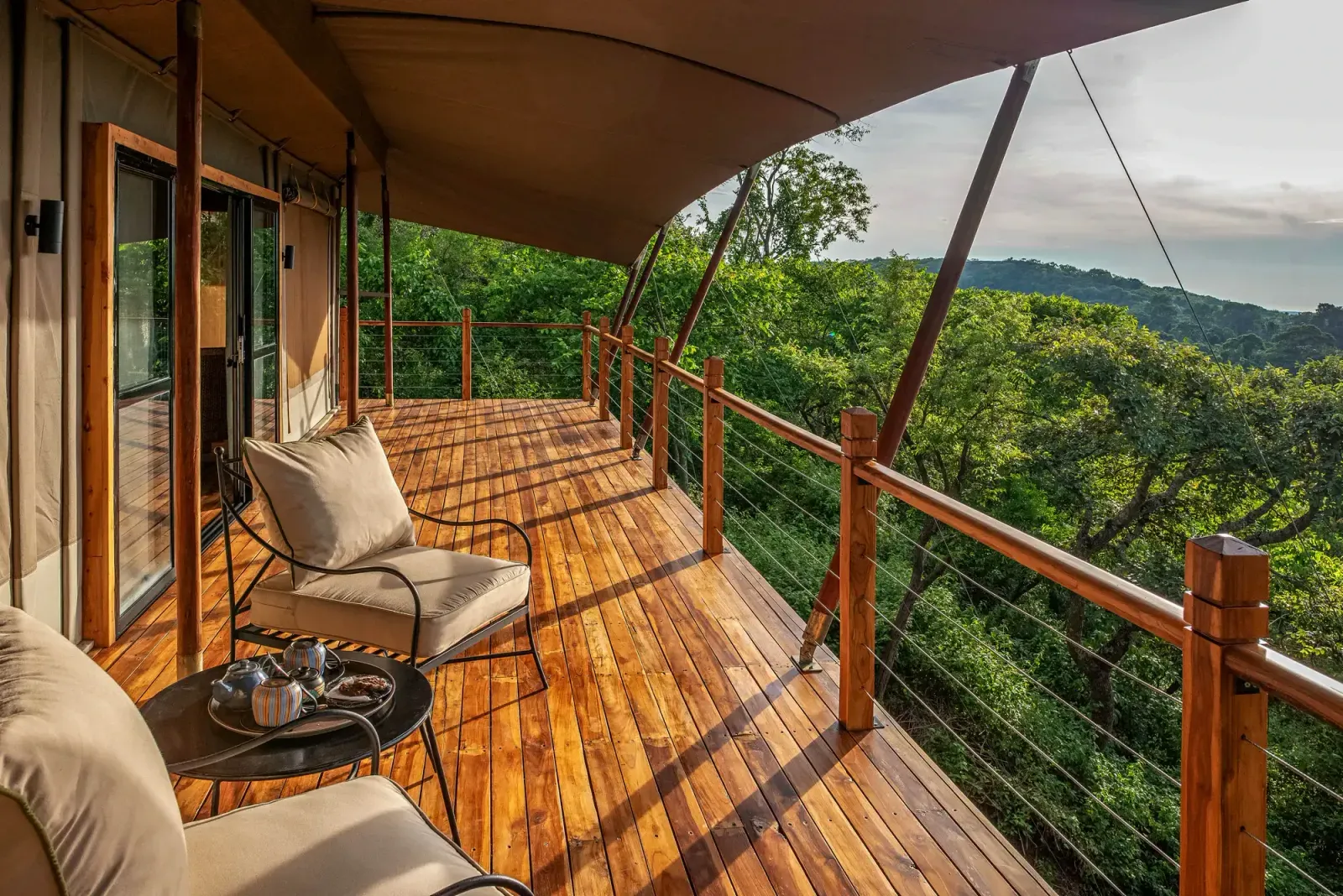
Accommodation consists of luxury tented suites, positioned to maximize privacy and extraordinary forest views. Floor-to-ceiling windows place guests face-to-face with the canopy, while private decks provide opportunities to watch birds, monkeys, and other wildlife without even needing to leave your room.
Pabidi’s greatest asset, though, is not its rooms, but its location. Chimpanzee tracking activities are only 10 minutes away, allowing you to be among the first visitors to enter the forest each morning. Birdwatching trails, guided nature walks, and other rainforest experiences are similarly accessible. Meanwhile, the savannah landscapes of Murchison Falls National Park are within relatively easy reach, allowing you to combine classic safari experiences with primate encounters from a single base if the chimps alone are not enough to keep you occupied.
For Great Lakes Safaris, which operates the property, the lodge represents an expansion of their high-end safari infrastructure into one of the country’s most ecologically important forests. For travelers, it offers a new way of experiencing Budongo.
The Green Scene
Pabidi Lodge sits inside a working conservation landscape, and it is built to leave it intact: tented suites tread lightly on the forest floor, and trails are managed to keep the forest, not the guest list, in charge. The permits, guiding work, and supply contracts the lodge generates give surrounding communities a direct financial stake in Budongo standing rather than being cleared — the calculation that decides whether a forest like this survives. Next door, the Budongo Conservation Field Station has monitored chimpanzee health, population dynamics, and habitat for decades, and tracking groups here are capped and scheduled around the chimpanzees rather than the visitors.
Why Budongo May Be Uganda’s Next Great Safari Destination
As African safari travelers become more experienced, many are seeking destinations that offer more than simply a checklist of wildlife sightings. Budongo Forest answers that by combining world-class chimpanzee tracking, exceptional biodiversity, meaningful conservation initiatives and, now, with the arrival of Pabidi Lodge, a level of accommodation suitable for the more discerning international traveler.
Standing in the forest after the chimpanzees had moved on, the silence felt almost as powerful as the encounter itself. Shafts of sunlight pierced the canopy. Somewhere in the distance another pant-hoot echoed through the trees. The forest carried on as it has for centuries. What has changed, though, is the way travelers can experience it. With its combination of eco-conscious design, conservation ethos, and unrivaled proximity to one of Africa’s best chimpanzee experiences, Pabidi Lodge may well become the address that finally puts Budongo Forest on the global safari map.
Frequently Asked Questions
Where is Pabidi Lodge?
Pabidi Lodge is in the Kaniyo Pabidi sector of Budongo Forest, on the edge of Murchison Falls National Park in northwestern Uganda. It is operated by Great Lakes Safaris and sits roughly 10 minutes from the forest’s chimpanzee tracking trailheads.
Is Budongo Forest good for chimpanzee tracking?
Yes. Budongo is home to more than 600 chimpanzees and is regarded as Uganda’s second most important chimpanzee habitat after Kibale National Park. Years of habituation work in the Kaniyo Pabidi sector mean sightings are unusually reliable, and groups are kept small to limit disturbance.
How is chimpanzee tracking different from gorilla trekking?
Chimpanzee tracking is faster, louder, and more mobile. Rather than hiking for hours through mountainous terrain to sit with a resting gorilla family, you follow highly social animals moving through the canopy, communicating through pant-hoots, calls, gestures, and displays.
Can you combine Budongo Forest with a Murchison Falls safari?
Yes. Budongo sits within the greater Murchison Falls ecosystem, so the park’s savannah game drives and the Nile are within relatively easy reach of Pabidi Lodge. Many travelers use the lodge as a single base for both primate tracking and classic safari.
What else is there to see in Budongo Forest?
Nine primate species, including colobus, red-tailed monkeys, baboons, and nocturnal bushbabies, plus more than 360 recorded bird species. Two of those — the yellow-footed flycatcher and Puvel’s illadopsis — are found nowhere else in East Africa.
Most Popular Posts