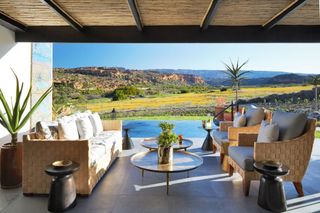
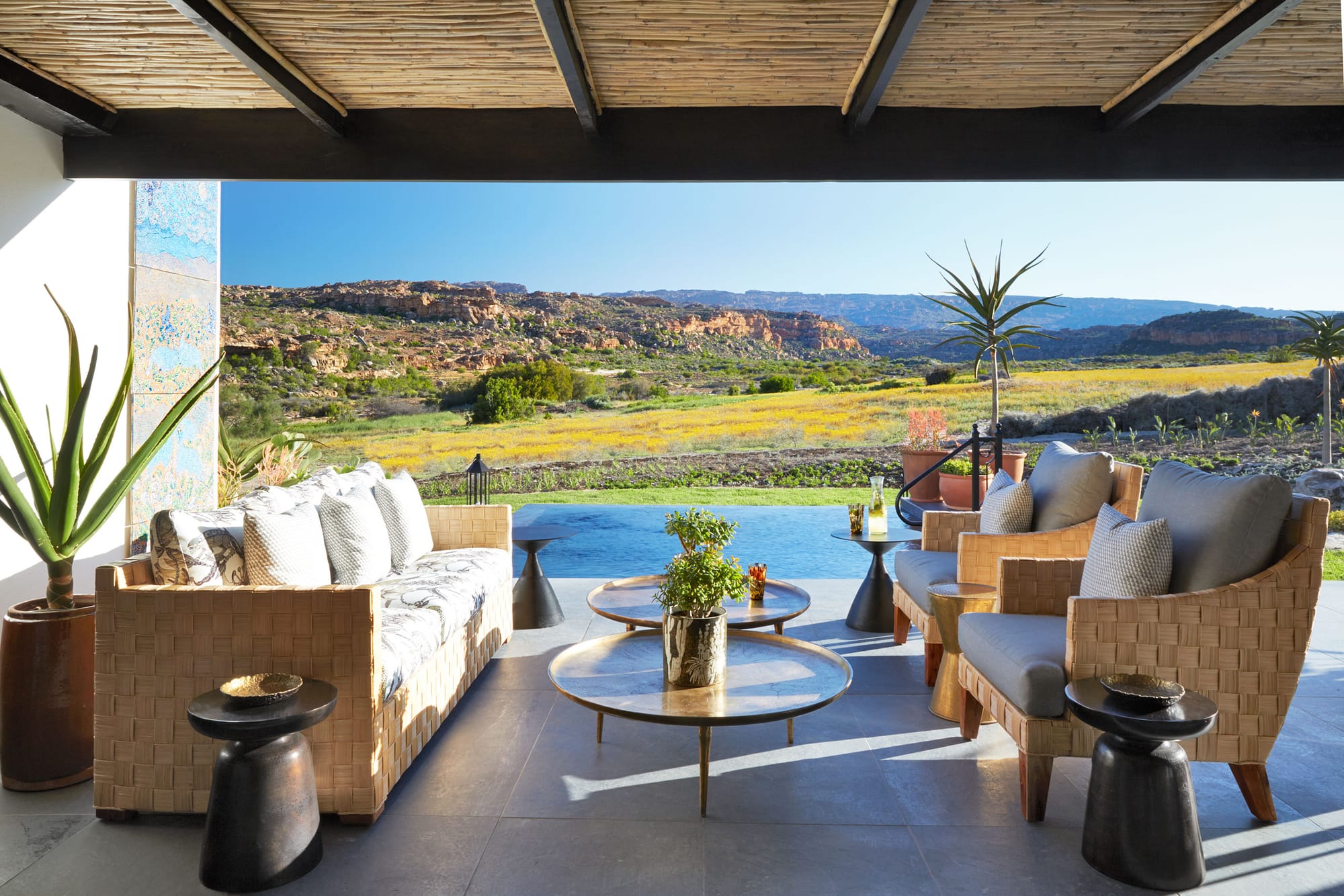

Long before I’d set foot in South Africa’s Cederberg Mountains, the place had taken hold of my imagination. The coastal road heading north-west out of Cape Town rose steadily; passing through the city, the industrial areas, and the outer suburbs, before opening out into large, sheep-filled fields. Then came the climb over the Pakhuis Pass, with its sandstone ridges, and purple and red boulders that seemed to balance impossibly on top of one another. I’d seen photos, and been told about the area before, but the scale of the Cederberg only made sense once I was driving through it. Rugged peaks, long walls of rust-red rock, solid and immovable sandstone mountains, laid down some 500 million years ago, and slowly and meticulously carved away by hundreds and thousands of years of water and wind.
I was on my way to Bushmans Kloof, a sprawling, private wildlife reserve and wellness retreat, three hours from Cape Town. While the mountains are named for the now critically endangered Clanwilliam cedar trees, the reserve itself takes its name from a ravine once associated with the Bushmen or San people, the indigenous hunter-gatherer peoples of Southern Africa, whose presence here stretches back thousands of years.
The Reserve
Bushmans Kloof is a 7,500-hectare/18,500-acre National Heritage Site, celebrated for its cultural, historical, and natural value, and for protecting over 755 species of indigenous flora and fauna. With plains covered in Karoo scrub and fragrant fynbos, a unique, fire-prone, and highly biodiverse shrubland vegetation, the reserve is part of the Cederberg Wilderness Area, which is in turn part of the Cape Floral Region Protected Areas, inscribed as a UNESCO World Heritage Site in 2004.
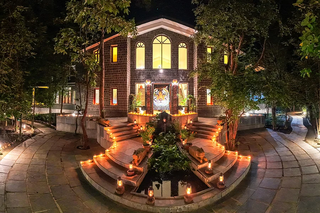
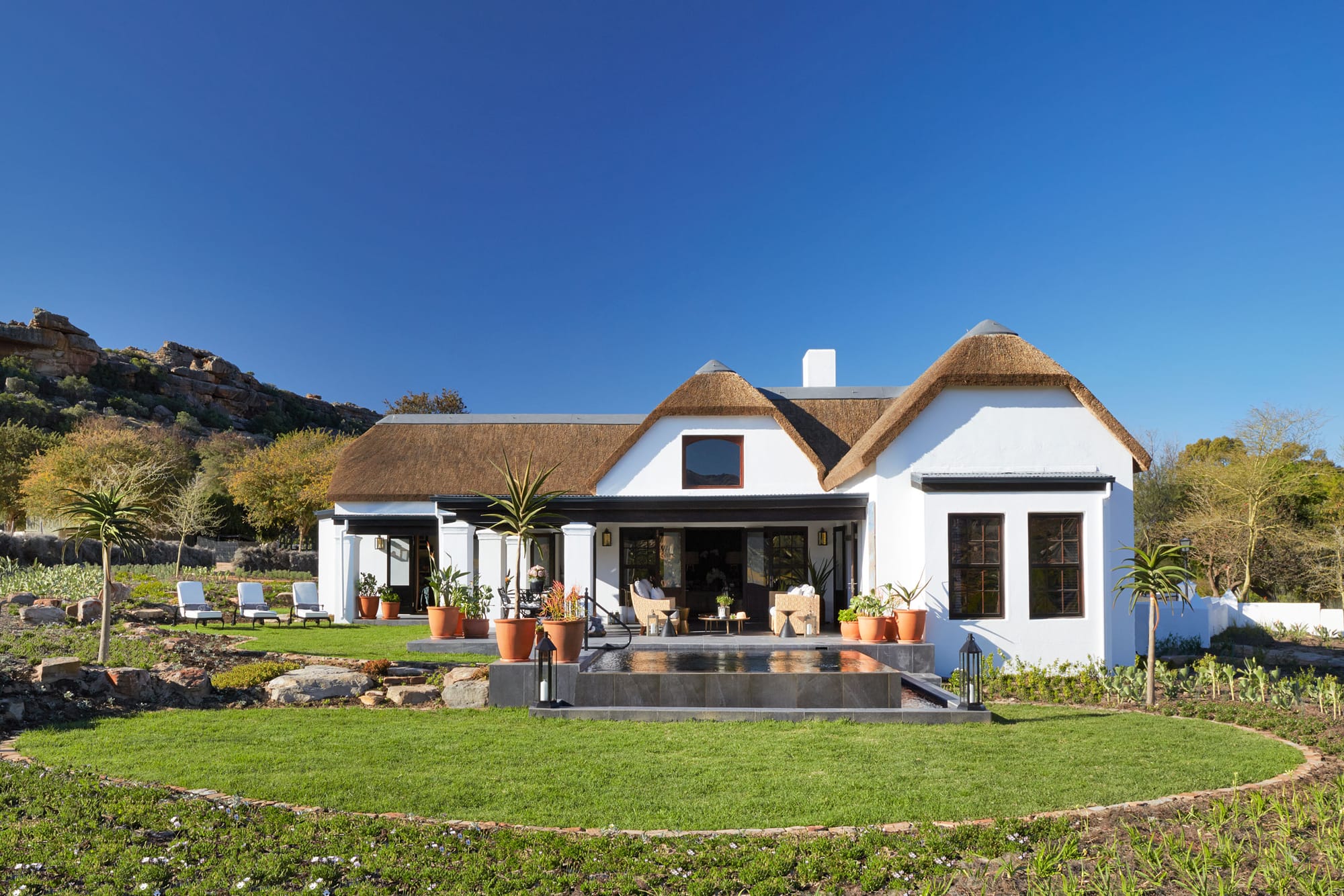
In 1991, father-son duo Bill and Mark McAdam purchased Bushmans Kloof. At the time it was four farms; a collection of farm buildings, surrounded by swathes of desperate, derelict and depleted farmland. Where others saw neglect, they saw a landscape with history and dreamed of restoring it. After consultations with conservationists and other experts, they began reviving the eroded gullies, rehabilitating overgrazed land, removing invasive flora, and restoring the indigenous wildlife. A decade of work saw the reserve take shape, opening to guests in 2000, with the 170-year-old manor house at its heart. Today, the Tollman family, owners of the internationally acclaimed Red Carnation Collection, owns the property, having purchased it in 2004, with the goal of continuing the McAdams' commitment to conservation. While remnants of its past life linger, with patches of farmland and an ongoing battle against invasive plant species, the transformation is dramatic. The land flourishes with over 300 indigenous plant species, and an array of wildlife, including the once almost extinct Cape Mountain zebra, has returned.
The Rock Art
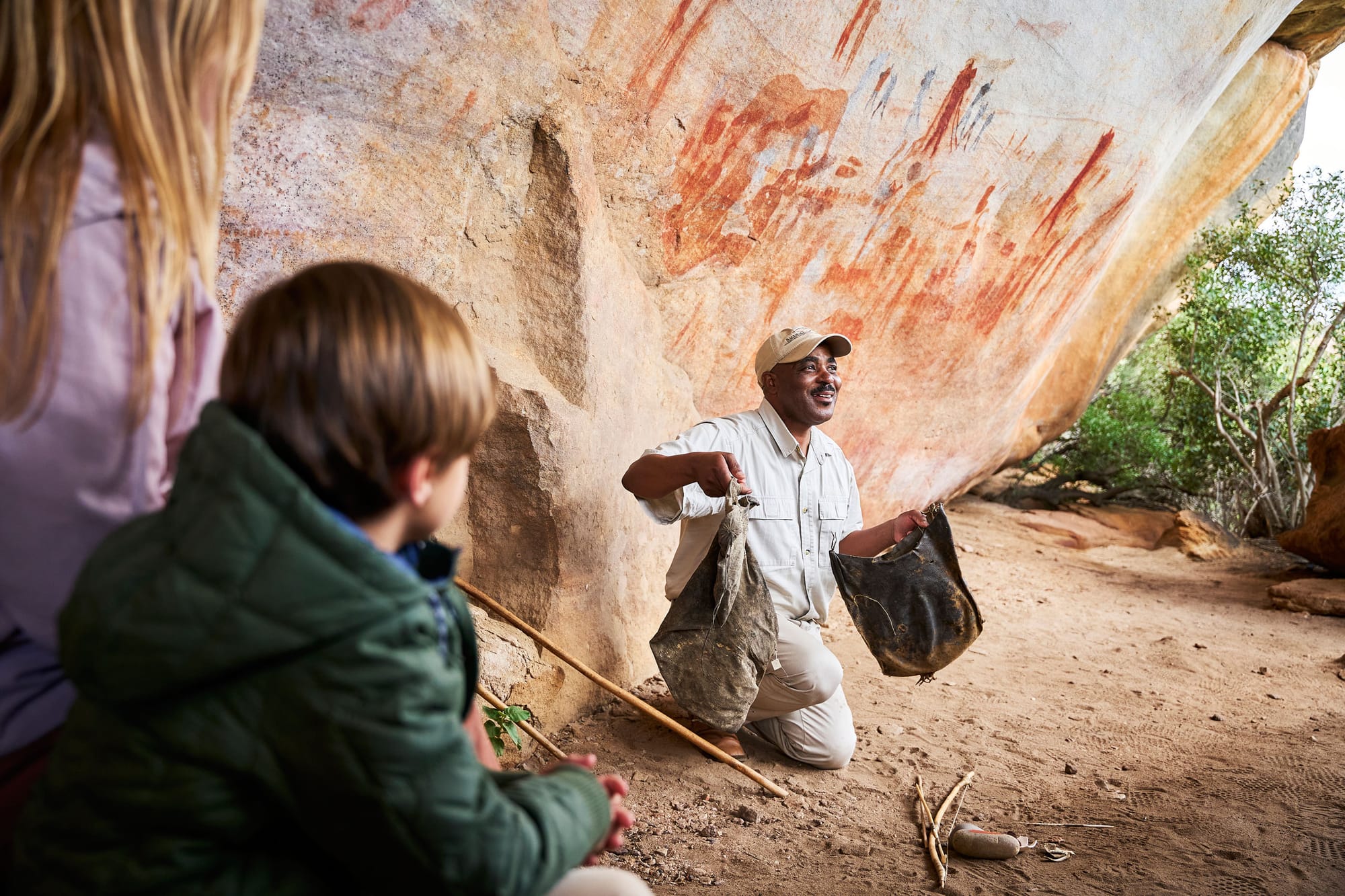
Beyond Bushmans Kloof’s dedication to protecting its natural environment, the reserve is also the custodian of 130 known rock art sites, with some dating back more than 10,000 years. The Cederberg Mountains are home to one of the richest concentrations of San rock art in southern Africa, with more than 2,500 individual sites recorded. This is one of the richest open-air art galleries in the world.
Painted using ochre, sap, blood and other pigments, the paintings offer a unique insight into the spiritual beliefs and cultural heritage of the nomadic San and Khoi people who once roamed these lands. Fine-line drawings of eland, hartebeest and elephant, hunters and trance dances, bold finger-painted herding scenes; impressive, not just by their number, but by their intricate detail and extraordinarily colorful, especially given their almost unfathomable age.
Bella’s Cave was a pre-breakfast stroll across the stream from the lodge. The area is too small to have been habitable, so it’s thought to be a shaman site, a place for trance dancing. There are paintings of tiny ochre yellow figures on the rockface, along with a mongoose-like creature, small antelopes, and a sprinkling of paintings so evanescent that they could well be apparitions conjured up by a shaman in a hallucinogenic state.
Another morning, our guide, Zenobia Van Dyk, led us through a narrow ravine to look at one of the most remarkable rock art sites I’ve ever seen. A wall of paintings stretched across three vast stone panels. “This one was created over centuries,” she tells us as we stand before the ochre and red figures that glow and shimmer in the amber afternoon light. “You can tell the difference between the generations by the pigments and by the overlapping of drawings. Each style belongs to a different tribe or a different time.” Some figures are faint, but others are more recent, their pigments darker and clearer. It’s amazing to stand in front of them and think of all the hands that have touched this rock throughout the millennia.
Later, a little rock hopping has us at Fallen Rock, a site large enough to have once perhaps sheltered up to a dozen people. Fragments of clay pottery, stone tools and ostrich eggshell beads remain in the cave. Painted here are red ochre figures, some are women, identifiable by their ample buttocks and breasts, while the men, signified by silhouetted penises, carry bows, arrows and spears. There’s also a tall person, painted in a deep red ochre, who seems to be a shaman and is bleeding from his nose, perhaps a symptom of a trance-like state.
The Heritage Center
At the lodge we spend some time at the Heritage Center, where a staggering collection of cultural artefacts are on display, including original San jewelry, quiver bags, dancing sticks, and musical instruments, some of which are more than 2,000 years old. Seeing these objects here, in their ancestral home, provides insights into the lives and culture of these ancient people whose artwork we’d had spent so much time looking at.
Bushmans Kloof's dedication to cultural stewardship extends beyond the hotel and those lucky enough to stay here. They run educational programs for school students, archaeologists and local communities alike, to explore the reserve's many rock art sites, as well as visit the Heritage Center. As Londi Ndzima, Bushmans Kloof’s dedicated Rock Art Curator says of the work he does with local communities, "Young kids don't understand how historically important rock art is. I want to share my ancestors' stories and show them why they should care."
The Wildlife
The wildlife at Bushmans Kloof does not include the ‘Big Five’. But while there are no roaring predators and no rushed game drives in pursuit of a sighting, what is here is an opportunity to slow down and spend time with the wildlife. You may be lucky and see a delicate Cape fox, with its silvery coat, a creature that’s rarely spotted elsewhere. Or perhaps a shy and elusive Cape leopard, smaller than the leopards found elsewhere in Southern Africa. They are rarely seen, though scat and footprints are not uncommon, and one was photographed recently in one of the rock art caves by a camera trap.
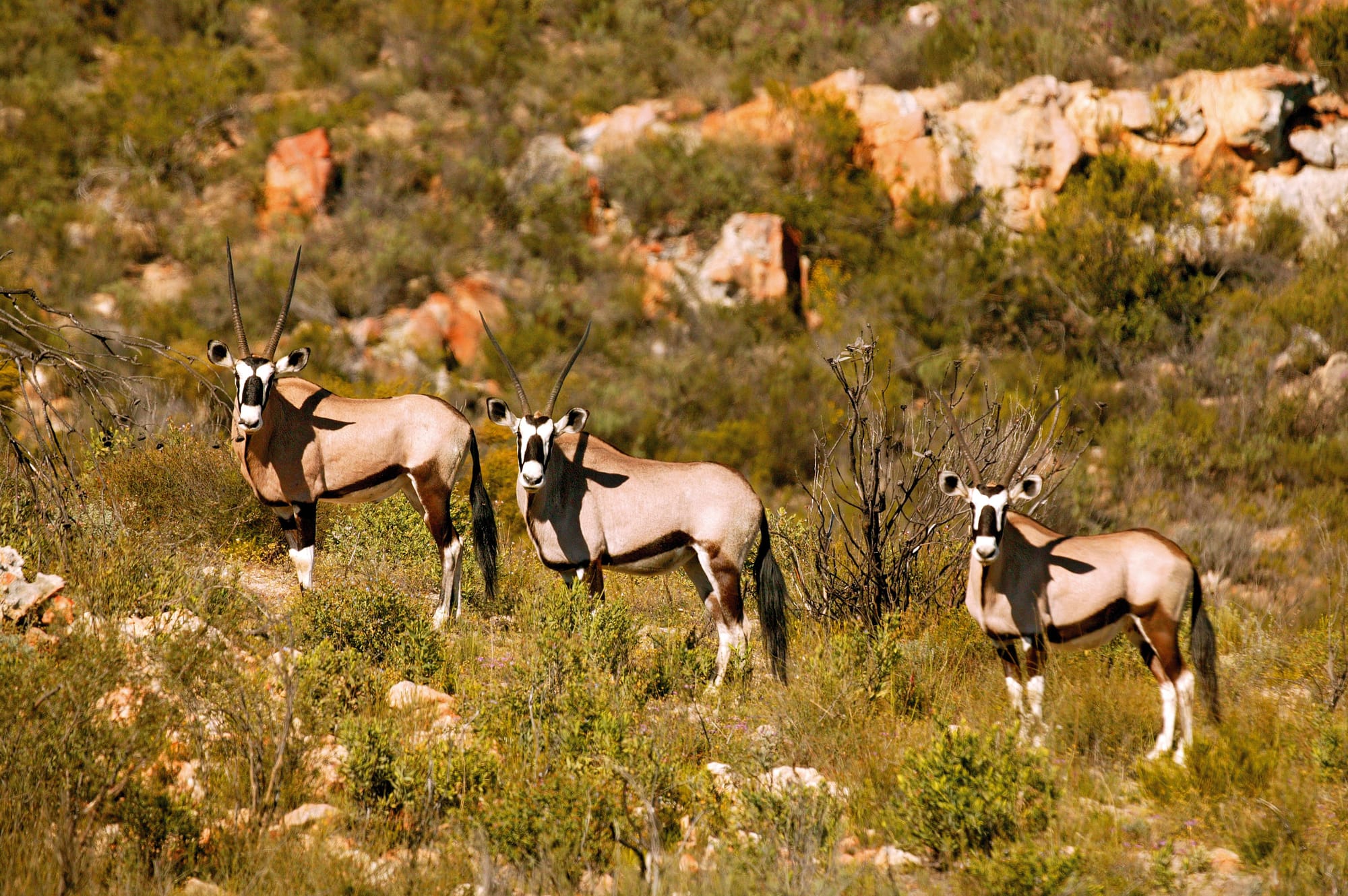
Our afternoons and evenings were spent with Zenobia, our guide and a fixture at Bushman’s Kloof for over 16 years. She took us on drives where we saw springbok and hartebeest in the fynbos, along with groups of Cape mountain zebra, a rare subspecies, endemic to South Africa’s coastal mountains, that was threatened with near extinction in the 1950s.
The Green Scene
Scene Conservation, Sustainability, & Safeguarding The Future But Bushman’s Kloof isn’t simply about preserving the past; it’s dedicated to safeguarding the future. Conservation runs through every aspect of the reserve. Bushmans Kloof works with the Cape Leopard Trust to protect these elusive cats, and with the Saving Sand Fish Project, that has been running a program since 2014 to restore a migratory fish species endemic to the area. They’ve partnered with Cheetah Outreach, to design the Anatolian Sheep Dog project, which enables local farming communities to protect their livestock from predators in a responsible manner, without resorting to poison or traps. And, in conjunction with the Botanical Society and Western Cape Nature Conservation, endangered Clanwilliam cedar trees are cultivated in the lodge’s nursery, before being reintroduced into the mountains. Even more importantly, education is prioritized through collaborations with local schools to show children the importance of ecosystems, flora and fauna, ancient rock art, and protecting these important lands.
Luxury tourism and sustainability often exist in uneasy tension. At Bushmans Kloof, the ambition is to dissolve that divide. The lodge operates with filtered borehole water to eliminate plastic bottles, a greywater system to recycle water for irrigation, glass replaces plastic wherever possible, and efforts are made, even with unexpected items, like biodegradable cornstarch shower caps. Energy use is supplemented by solar, and resource consumption is carefully monitored in a region where water scarcity is an ever-present challenge. Waste is sorted, composted or repurposed, closing nutrient loops wherever possible.
At the heart of the property lies an organic kitchen garden and seasonal produce dictates the menu. Honey harvested from the reserve’s own bees. Fish is sourced via the Abalobi app, ensuring direct support for small-scale South African fishers, while meat comes from local farmers. Surplus food is composted or shared with subsistence farmers in nearby communities.
The staff, over 100 of them, live here with their families in a close-knit village, and every team member is given volunteer days each year to support causes they care about, reinforcing the idea that sustainability isn’t just about the land, it’s about people, too.
Bushmans Kloof is a member of Stay Beyond Green, a collection of hotels representing sustainability leadership in action. Guided by the United Nations Sustainable Development Goals, Stay Beyond Green's rigorous vetting process sets out standards across three key pillars: environmentally friendly practices, support for the protection of cultural and natural heritage, and direct and tangible social and economic benefits to local communities. Bushmans Kloof ticks all three boxes.
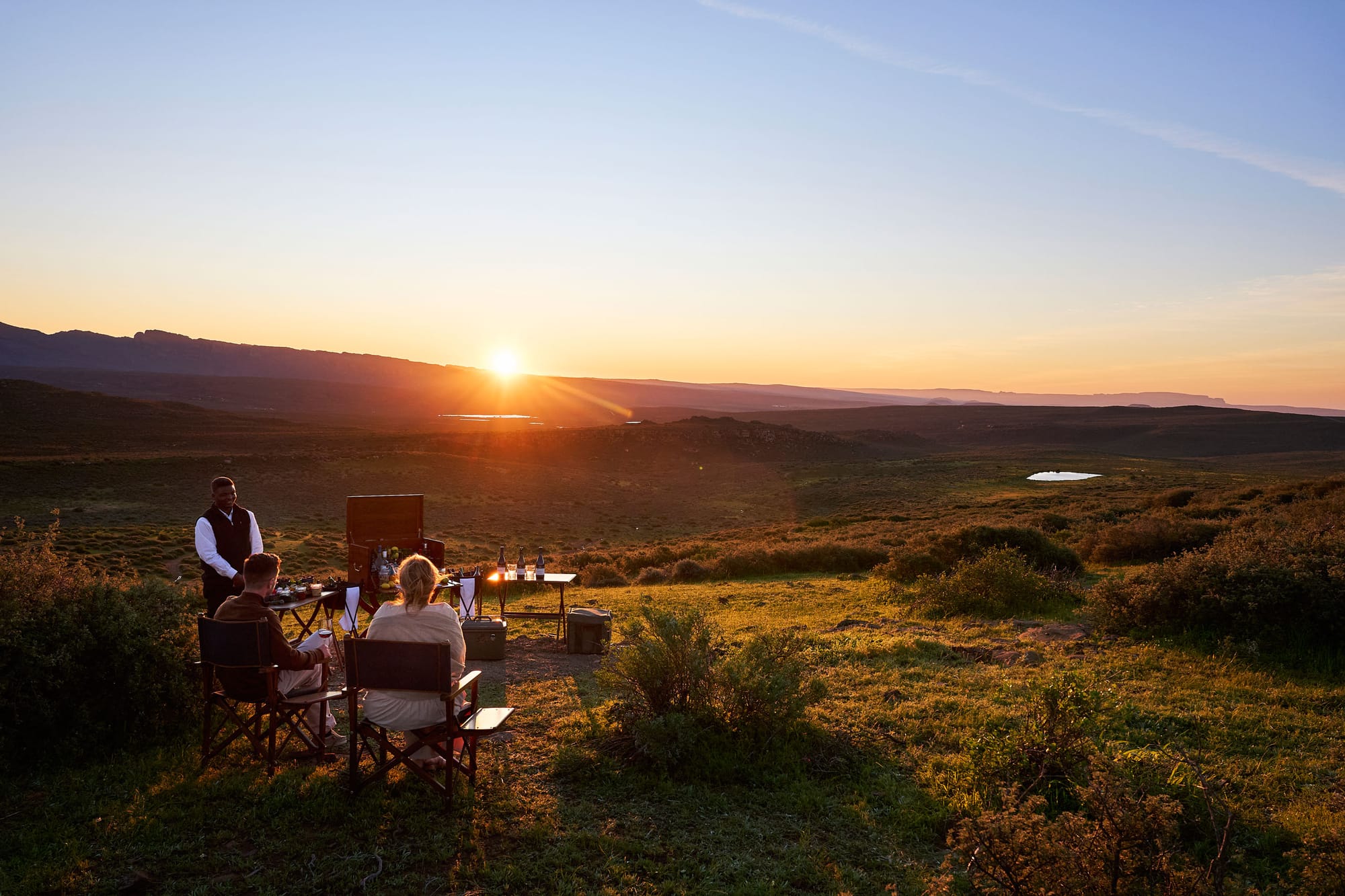
Walking alone in a game reserve isn’t something many places allow, but here, with no large predators, you can. There are several hiking trails, marked with stone cairns, that lead you up over the rocks to incredible viewpoints. Early on our final morning, I took one last walk. Alone, with only the whisper of the wind and the occasional rustle of an animal in the brush, I took in the scent of the fynbos, wandered past grazing red hartebeest, watched a family of Cape zebra, motionless save their flicking tails, spied several ostriches, along with a steenbok and her baby, and stumbled across a sunbathing Crag lizard, basking on a lichen covered boulder. What a magical morning, in a magical place.
Frequently Asked Questions
What makes Bushmans Kloof one of the most sustainable lodges in South Africa?
Bushmans Kloof combines landscape-scale restoration, rock art conservation, community engagement, and measured resource use, and is vetted by Stay Beyond Green against the UN Sustainable Development Goals, putting it firmly in the upper tier of regenerative properties.
How has Bushmans Kloof transformed four depleted farms into a thriving wilderness reserve?
Since 1991, the owners have rehabilitated eroded gullies, removed invasive plants, re-seeded indigenous vegetation, and reintroduced native wildlife across 7,500 hectares, turning exhausted farmland into a functioning ecosystem and National Heritage Site.
What role does Bushmans Kloof play in protecting Cape mountain zebra and other rare species?
The reserve provides safe habitat for the once nearly extinct Cape mountain zebra and other endemic species, protects migration corridors within the Cederberg, and monitors populations through regular game counts and research partnerships.
How does the lodge support research and monitoring of elusive species like the Cape leopard?
Working with the Cape Leopard Trust and other researchers, Bushmans Kloof hosts camera traps and data collection projects that help build a clearer picture of leopard movements and behavior in the Cederberg.
What is Stay Beyond Green, and what does Bushmans Kloof’s membership actually mean for guests?
Stay Beyond Green is a global portfolio of properties that meet rigorous sustainability criteria aligned with the UN SDGs, so Bushmans Kloof’s membership signals that its conservation, community, and operations are independently vetted rather than self-declared.
How does Bushmans Kloof manage its water, energy, and waste in such a remote environment?
The lodge relies on filtered borehole water, solar-supplemented energy, and greywater recycling, and has removed most single-use plastic from daily operations to reduce pressure on local systems and landfill.
What is the Abalobi app, and how does it change the way Bushmans Kloof sources its seafood?
Abalobi links the kitchen directly to small-scale South African fishers, allowing chefs to buy traceable, responsibly caught seafood at fair prices while avoiding vulnerable species and industrial supply chains.
How does the lodge’s approach to local meat, produce, and surplus food support nearby communities?
Meat is sourced from nearby farmers, produce is largely local, and surplus food is distributed to surrounding subsistence communities, turning the food system into a direct economic and nutritional support for the region.
In what ways does Bushmans Kloof protect and restore the fragile fynbos and Clanwilliam cedar trees?
Conservation teams remove invasive species, nurture indigenous fynbos, and cultivate endangered Clanwilliam cedars in a nursery before replanting them in the mountains, helping to restore this UNESCO-listed floral region.
How does Bushmans Kloof safeguard and interpret its 130 rock art sites for future generations?
Access is limited to guided visits, sites are regularly monitored and documented, and the Heritage Centre preserves artefacts on-site, with interpretation focused on San and Khoi perspectives rather than purely colonial narratives.
What kinds of educational programs does Bushmans Kloof offer for schools and local communities?
The lodge hosts school groups, researchers, and community visits that combine time at rock art sites with hands-on learning in the Heritage Centre, giving young people a tangible connection to Indigenous history and conservation.
How are staff and their families integrated into life on the reserve, and what impact does that have?
Over 100 staff members live on-site with their families, receive annual volunteer days to support causes they care about, and become long-term stewards of the land and culture rather than transient employees.
How does Bushmans Kloof align with global sustainable tourism standards like the GSTC pillars?
Its work in restoration, cultural heritage, community benefit, and responsible operations maps closely to GSTC’s four pillars—effective planning, local economic and social benefits, cultural heritage protection, and environmental stewardship—even as it follows Stay Beyond Green’s SDG-based framework in practice.
What can guests personally do during their stay to support conservation and cultural stewardship at Bushmans Kloof?
Guests can choose rock art walks and educational drives, stick to marked trails, respect guidance at sacred sites, opt for local and lower-impact dishes, and engage with staff and community programs that keep this landscape and its stories alive.gstc+2
Do you want a second, even more condensed version (one-line answers only) for use in an accordion or sidebar module, or is this depth about right for the main feature page?
Most Popular Posts