
The best summer trips are getting cooler. As the classic July hotspots push toward the high thirties, a growing number of travelers are pointing the other way — north, and up — toward places where the evenings still ask for a sweater and the trails aren't shoulder to shoulder. Coolcation, the industry calls it, though the idea is older than the word: go where the heat isn't.
In Booking.com's 2025 research, nearly four in 10 travelers said they actively avoid crowded destinations, and more than a third choose an alternative to dodge the crush. Cool-climate regions answer both impulses at once, spreading visitors — and their spending — into quieter corners well outside the peak-season scrum.
The places that do it best don't just sit in a good climate; they run on it. Rivers turned to hydropower, boreholes tapped for heat, roofs laid with solar — the same landscape that keeps the summer mild often keeps the lights on. With that in mind, we pulled 12 to highlight, across Europe and North America and every budget, where the cool air and the clear conscience come in the same room.
The 12 Coolcation Stays
- Torfhús Retreat, Iceland
- Ollero Eco Lodge, Finnish Lapland
- Alladale Wilderness Reserve, Scotland
- Bryn Elltyd Eco House, Wales
- Chetzeron, Switzerland
- Landal Resort Maria Alm, Austria
- Fogo Island Inn, Newfoundland
- Ilimanaq Lodge, Greenland
- Klahoose Wilderness Resort, BC
- Tutka Bay Lodge, Alaska
- Salishan Coastal Lodge, Oregon
- Dunton Hot Springs, Colorado
Torfhús Retreat
Golden Circle, Iceland · Luxury
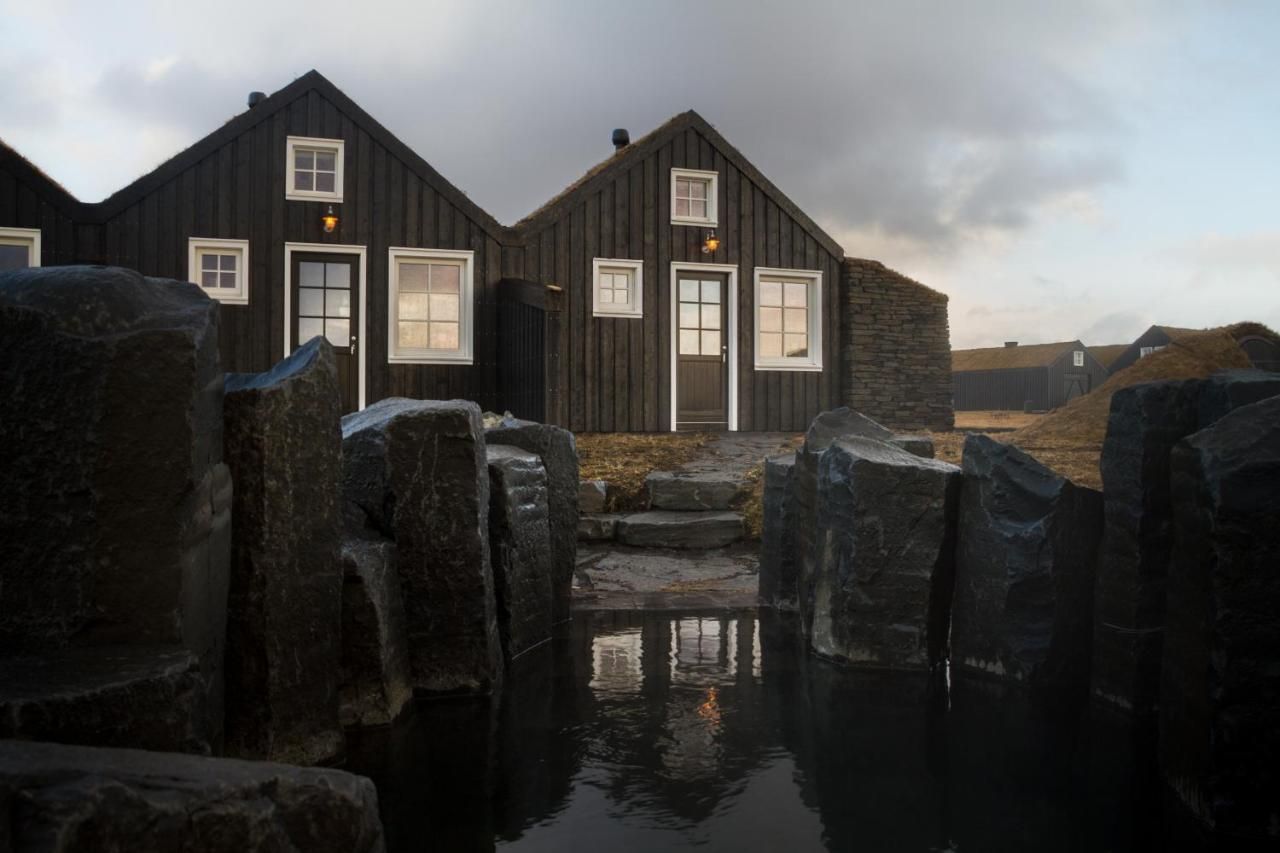
Set on a lava plain within reach of the Golden Circle, Torfhús Retreat looks like a Norse farmstead redrawn for the design age — turf roofs pulled low over villas of reclaimed timber, each with a private hot pot steaming against the cold. Inside, the walls are hand-worked oak and pine; outside, the light stretches past midnight and the only sound is wind off the highlands.
The Green Scene
The retreat draws all of its electricity from the Brúarvirkjun hydroelectric plant a few miles away, and its heat from a geothermal borehole reaching roughly 1,000 meters down. Villas are built from reused oak and pine worked in Torfhús's own on-site workshop, down to a repurposed Icelandic fishing boat set into the design.
Ollero Eco Lodge
Rovaniemi, Finnish Lapland · Mid-range
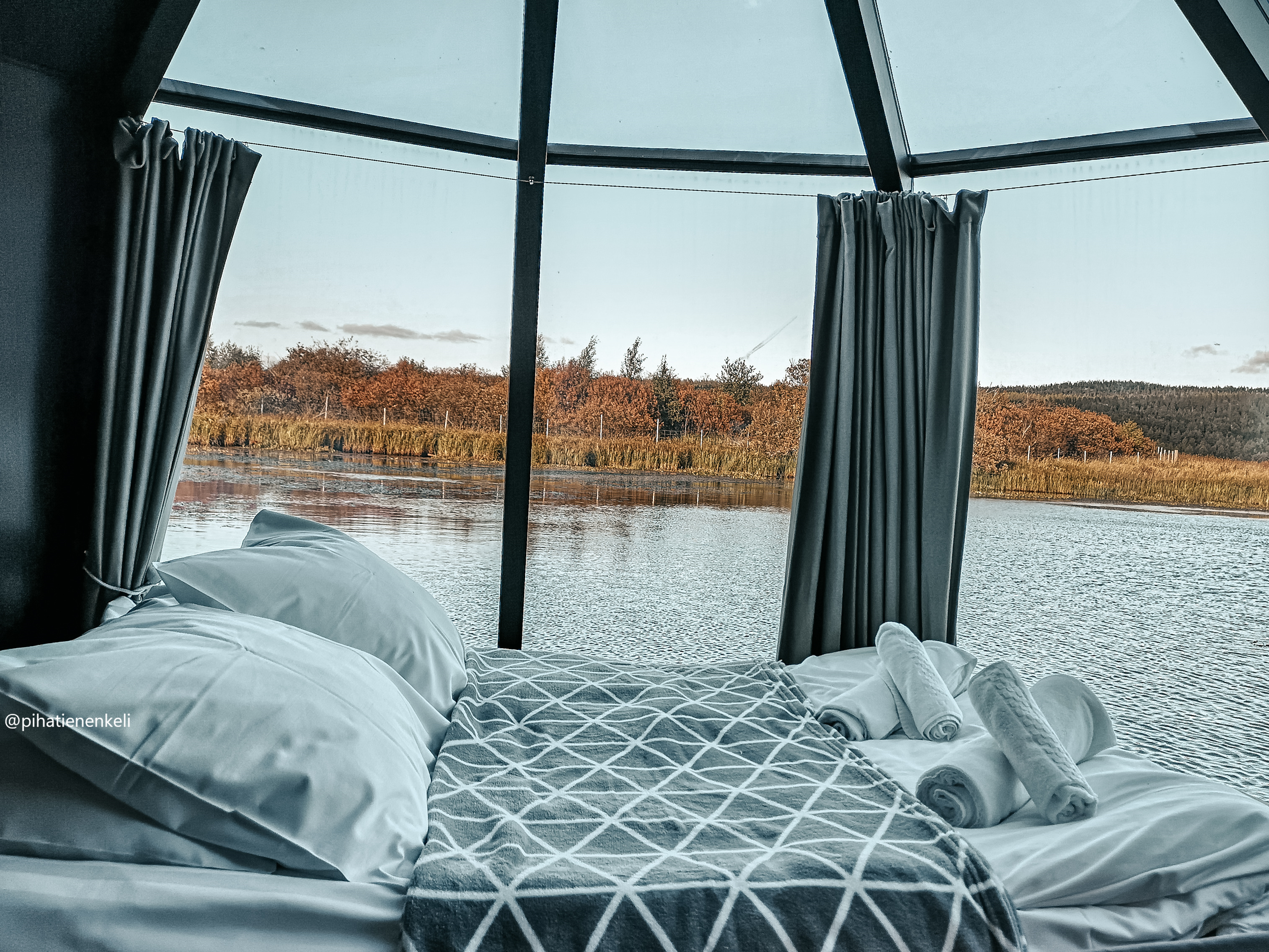
On the Arctic Circle outside Rovaniemi, Ollero Eco Lodge trades the price tag of a glass igloo for the same slice of sky — log cabins and a single glass-roofed room where the Lapland night comes to you from bed. Summer here runs long and pale, the forest cool and mosquito-loud, the midnight sun refusing to set.
The Green Scene
Power comes from a supplier running entirely on wind and bioenergy; the glass igloo adds solar and renewable biodiesel. The cabins use composting toilets, full recycling, and log construction. Ollero holds both the Green Key certification and the Sustainable Travel Finland label administered by Visit Finland.
Alladale Wilderness Reserve
Sutherland, Scottish Highlands · Luxury (exclusive-hire)
Across 23,000 acres of Sutherland, Alladale Wilderness Reserve hands you a Victorian lodge and the glen around it — red deer on the ridgelines, salmon in the river, and Scots pine going back into ground that lost it centuries ago. You book the lodge whole, staff and all, and the wilderness comes with it.
The Green Scene
An on-site hydro turbine powers zero-emission food production, including aquaponic greenhouses that feed the kitchen. For more than 20 years the reserve has been restoring ancient Caledonian pinewood and peatland, work carried out with The European Nature Trust and supporting Scottish wildcats, red squirrels, and raptors.
Bryn Elltyd Eco House
Blaenau Ffestiniog, Eryri (Snowdonia), Wales · Budget
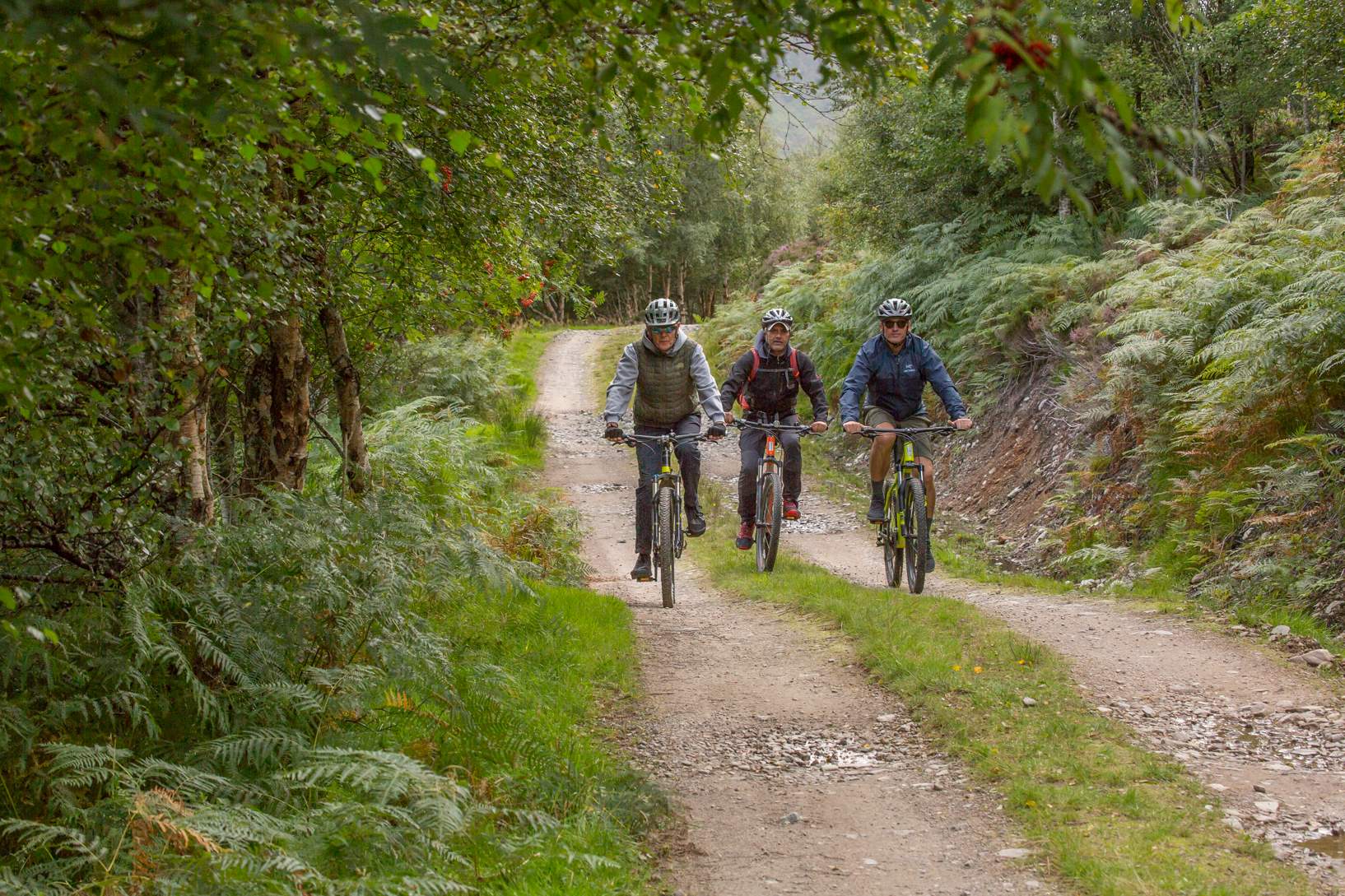
In the slate country of Eryri, Bryn Elltyd is a family-run guesthouse with a hydro lake at the door and the peaks of Snowdonia rising behind it. This is the whole coolcation idea at its plainest and cheapest — walk from the breakfast table straight onto the mountain, and come back to a house that costs less than a city hotel.
The Green Scene
The house runs its own micro-hydro and has been powered by renewables since 2013, which its owners report leaves it carbon-negative. Electric-vehicle chargers have run off the same supply since 2012. It's a genuine owner-operator eco-house rather than a resort — rooms only, mountains included.

Chetzeron
Crans-Montana, Valais, Switzerland · Luxury
At 2,112 meters above Crans-Montana, Chetzeron began as a cable-car station and came back as a hotel of stone and glass, its infinity pool set out over the Rhône Valley. Ski-in in winter, hike-out in summer — either way you're above the tree line, in the thin bright air the Valais does better than anywhere.
The Green Scene
Two hundred square meters of photovoltaic panels supply more than half the hotel's electricity, and a wood-pellet boiler burning local Valais pellets covers about 80 percent of its heat. Its walls came from 1,400 square meters of stone recovered within three kilometers, laid by Valaisan craftsmen. The building carries the Swiss Minergie-P low-energy standard.
[Image placeholder — add hero for Chetzeron; source site exposed no usable image URL.]
Landal Resort Maria Alm
Maria Alm, Salzburgerland, Austria · Mid-range (family)
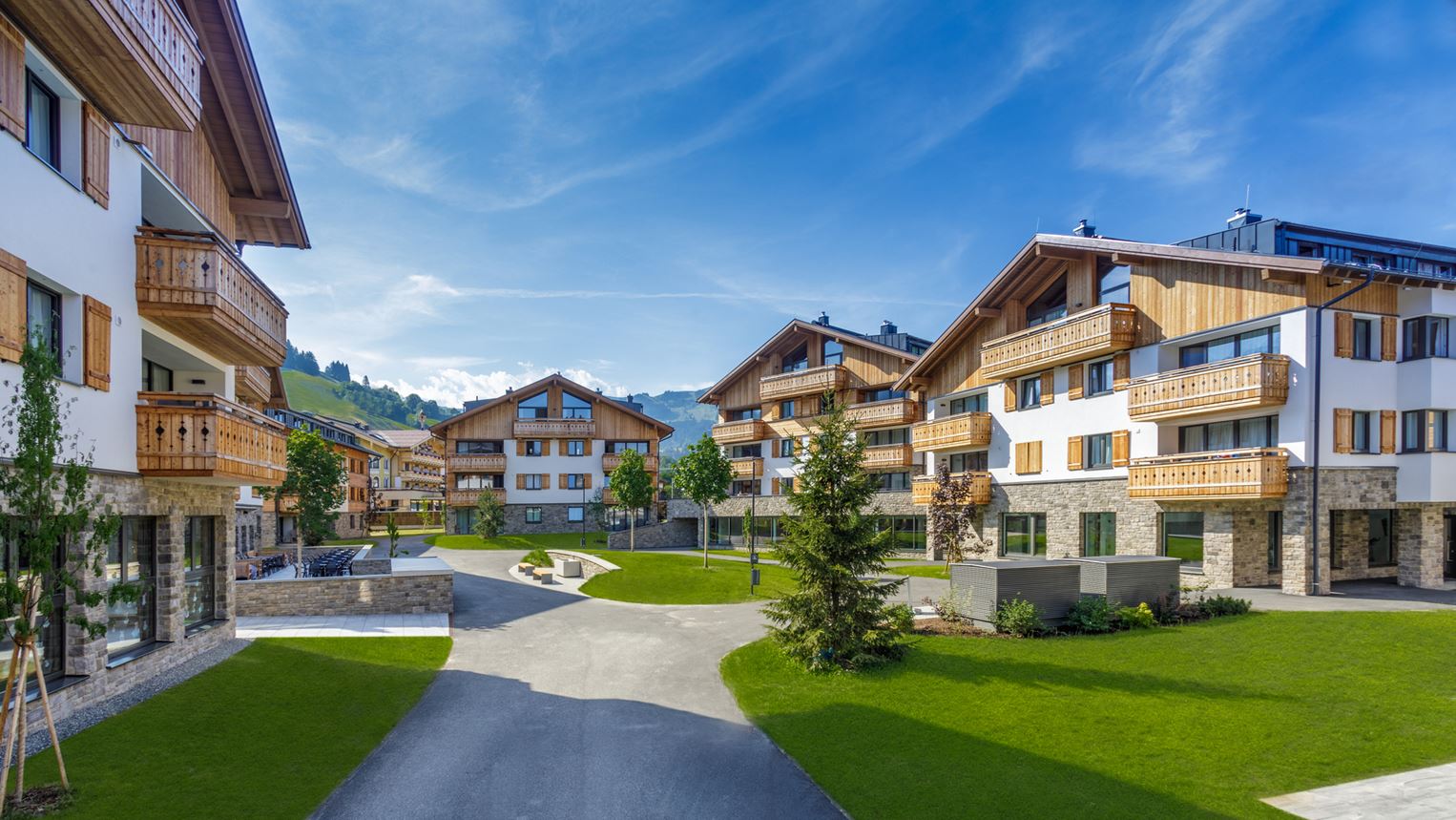
At the foot of the Steinernes Meer, Landal Resort Maria Alm is a cluster of chalet-houses built for families who want the mountains without the concierge — self-catering kitchens, room for the kids, and hiking trails that start at the door. The Salzburg Alps keep July in the low twenties and the meadows in wildflowers.
The Green Scene
The resort runs on its own hydroelectric plant on the Urslau river — a station first built in 1906 and modernized to supply electricity and heat to some 550 beds — with EV charging drawn from the same source and a local biomass plant covering peak demand.
Fogo Island Inn
Fogo Island, Newfoundland & Labrador · Ultra-luxury
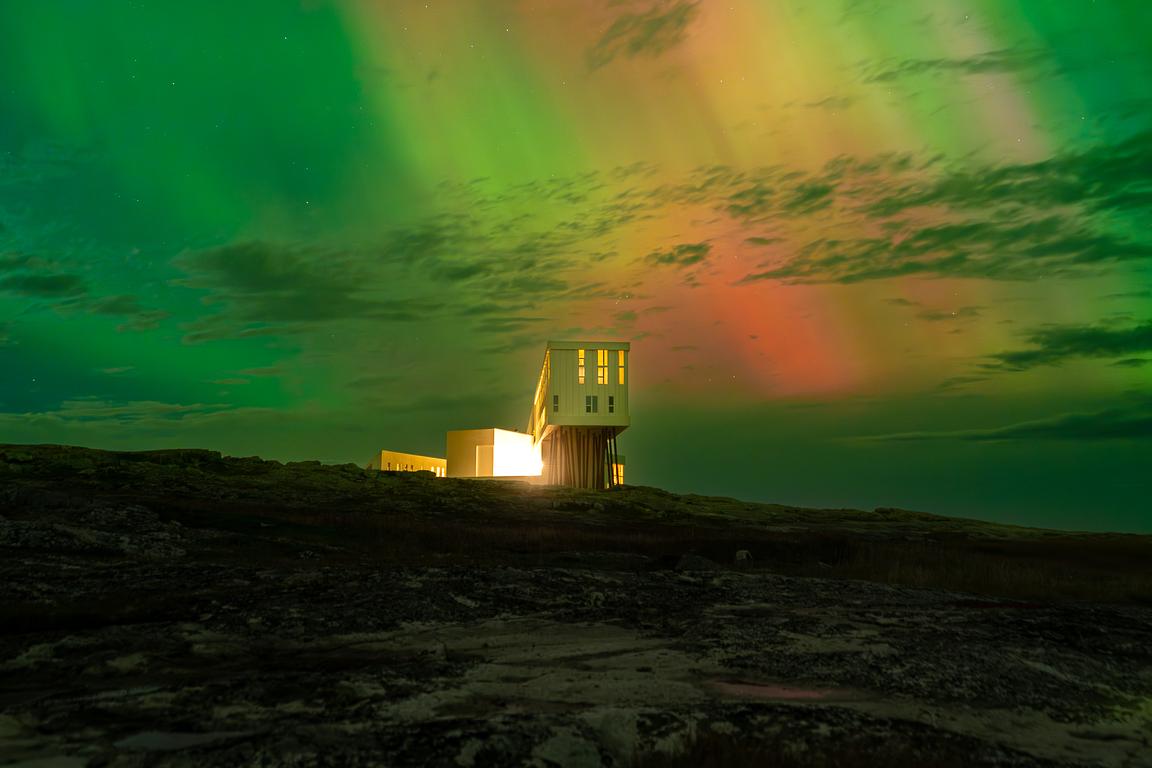
On stilts at the edge of the North Atlantic, Fogo Island Inn stands where the map runs out — a long white line of a building above the rock, the ocean filling every window. Summer barely clears the low twenties here, and the point of the place is the weather it faces down: fog, wind, iceberg season, the raw north made comfortable.
The Green Scene
The inn runs on hydroelectric grid power plus 69 solar-thermal panels feeding its radiant heat, with a rainwater cistern flushing the toilets and ecological greywater treatment — a first for Newfoundland. It operates as a community social business, returning its surplus to the island through the Shorefast charity, and sources 80 percent of its kitchen from Newfoundland and Labrador. A Relais & Châteaux member with three Michelin Keys.
Ilimanaq Lodge
Ilimanaq, Disko Bay, Greenland · Mid-range to luxury
In a settlement of fifty people on Disko Bay, Ilimanaq Lodge sets glass-fronted cabins over the water and lets the icebergs do the rest, drifting past from the Ilulissat Icefjord just up the coast. The season runs mid-June to mid-September, when the Arctic light is endless and the temperature rarely troubles double digits.
The Green Scene
The cabins run on solar, and their surplus electricity feeds back into the settlement's own grid. The lodge hires locally, sends leftover food to the village's sled dogs, and has restored 18th-century colonial buildings to house its restaurant, keeping both the economy and the architecture of Ilimanaq in use.
[Image placeholder — add hero for Ilimanaq Lodge; source site exposed no usable image URL.]
Klahoose Wilderness Resort
Desolation Sound, British Columbia · Luxury
Reached only by boat or floatplane deep in Desolation Sound, Klahoose Wilderness Resort is owned by the Klahoose First Nation, who bring guests into their own territory for grizzly viewing and cedar-weaving in the cool coastal air. The fjord keeps the summer mild and the crowds absent — there is no road in, and that's the entire point.
The Green Scene
The resort is off-grid on micro-hydro; a 2022 upgrade tripled its generating capacity and retired the diesel generators, cutting roughly 38 tonnes of carbon a year. Guest conservation fees fund stewardship across Klahoose territory, alongside local hiring and cultural programming. It holds a GSTC-recognized Sustainable Tourism Silver certification.

Tutka Bay Lodge
Kachemak Bay, Alaska · Luxury (small)
In a protected cove off Kachemak Bay, a boat ride from Homer, Tutka Bay Lodge is six rooms set against a wall of Alaskan wilderness — spruce, tide, and the odd sea otter working the kelp. Maritime summers keep it cool and green, and the kitchen, run by a chef the lodge is known for, leans hard on what the bay and the nearby farms give up.
The Green Scene
Self-contained and off-grid, the lodge runs on solar panels, wind turbines, and a biodiesel generator, with wood-stove heat and spring-fed water. It composts all its food waste, buys produce from local farms in returnable containers, and serves Alaska-only fish. Within The Wild is a member of the Regenerative Hospitality Alliance.

Salishan Coastal Lodge
Gleneden Beach, Oregon Coast · Mid-range
Above Siletz Bay on the Oregon coast, Salishan Coastal Lodge is tucked into a forest of shore pine, connected by covered walkways, with the Pacific holding the summer somewhere in the sixties. Golf, a spa, miles of estuary trail — it's the most easygoing entry on this list, and the easiest to reach without a floatplane.
The Green Scene
Salishan holds EarthCheck Bronze benchmarking, has cut single-use plastics, and runs recycling and composting across the property. Guest-supported programs fund reforestation through One Tree Planted, and the kitchen sources from Oregon growers and fishers.
Dunton Hot Springs
San Juan Mountains, Colorado · Luxury
At nearly 9,000 feet in the San Juans, Dunton Hot Springs is a whole 1800s mining town brought back to life — hand-hewn cabins, a saloon with the original bar, and natural hot springs steaming under cold mountain nights. The altitude does the cooling; the springs do the rest, and the whole place is yours to roam between the aspen and the peaks.
The Green Scene
Dunton's Colorado properties run on 100 percent renewable electricity. Food scraps are composted in-ground and kitchen byproducts go to a nearby farm, while a partnership with Kind Traveler sends three dollars a night to a homeless shelter in Cortez. (The hot springs are for soaking — the renewable claim is the electricity, not geothermal building heat.)
Frequently Asked Questions
What is a coolcation?
A coolcation is a summer trip planned around cooler weather instead of heat — heading north or to higher elevations where evenings stay mild and trails stay quiet. It has grown as travelers look to dodge both extreme heat and peak-season crowds, and it spreads visitor spending into off-the-beaten-path regions.
Which of these cool-climate stays is best on a budget?
Bryn Elltyd Eco House in Eryri (Snowdonia), Wales, is the most affordable pick — a family-run, renewable-powered guesthouse with mountain trails at the door that costs less than a typical city hotel. Ollero Eco Lodge near Rovaniemi and Landal Resort Maria Alm are solid mid-range options.
Which stay is best for families with kids?
Landal Resort Maria Alm in Austria's Salzburgerland is built for families, with self-catering chalet-houses, room for children, and hiking trails that start at the door. The Salzburg Alps keep summer temperatures in the low twenties Celsius and the meadows full of wildflowers.
Which of these is the most remote, off-grid escape?
Klahoose Wilderness Resort in British Columbia's Desolation Sound is reachable only by boat or floatplane and runs off-grid on micro-hydro. Tutka Bay Lodge in Alaska and Ilimanaq Lodge in Greenland are similarly remote, both powered by their own renewable systems.
When is the best time to visit for a summer heat escape?
Most of these stays are at their best from June to September, when the far-north destinations — Iceland, Finnish Lapland, Greenland and Newfoundland — get long days or the midnight sun while staying cool. Arctic-edge lodges like Ilimanaq Lodge run a short season from mid-June to mid-September.
Which stays are easiest to reach without a long journey?
Salishan Coastal Lodge on the Oregon Coast is the most easygoing to reach — no floatplane required — followed by Landal Resort Maria Alm in Austria and Chetzeron above Crans-Montana in Switzerland, both accessible by road and cable car.
How do these hotels stay cool without heavy air conditioning?
They rely on climate and elevation rather than energy-hungry cooling: high-altitude and far-north settings keep summer temperatures naturally mild, from Chetzeron at 2,112 meters to Dunton Hot Springs at nearly 9,000 feet and the maritime cool of Fogo Island and Tutka Bay.
What makes these stays genuinely sustainable rather than greenwashing?
Each runs on the landscape that keeps it cool — hydropower, geothermal boreholes, solar and wind — and most carry independent credentials, including Green Key, EarthCheck, GSTC-recognized certification and Switzerland's Minergie-P standard, alongside conservation, local sourcing and community programs.
Most Popular Posts