“Birding is for everyone.” In practice, this common sentiment — that birding is easy and accessible — doesn’t always feel that way.
For beginners, the challenge isn’t being keen to see or to get outside. It is knowing when and where to look, and how to understand what they’re seeing. Something seemingly so simple — spotting birds — can sometimes be overwhelming. Identification adds another layer. Group walks can move quickly. Field guides can feel dense. Even the most biodiverse places can feel challenging.
The gap isn’t access. It’s support.
There are several lodges and reserves designed to close that gap. They lend equipment, slow the pace, and focus on the small details that turn a fleeting sighting into recognition. Birders are welcomed into learning environments that help move them beyond the novel and lighthearted identification of LBB’s (Little Brown Birds) or LBJ’s (Little Brown Jobs/Jobbie). Just as importantly, they create space for not knowing.
For new birders, these make an experience feel accessible from the start.
The 9 Beginner-Friendly Bird Lodges
- O’Reilly’s Rainforest Retreat, Australia
- Algonquin Eco-Lodge, Canada
- Cape May Bird Observatory, United States
- Slimbridge Wetland Centre, United Kingdom
- Canopy Lodge, Panama★ Our Pick
- Mashpi Lodge, Ecuador
- Tinamú Birding Nature Reserve, Colombia
- Nibela Lake Lodge, South Africa
- Satpura Tiger Reserve Lodges, India
O’Reilly’s Rainforest Retreat
Australia · A structured, confidence-building introduction to birding
World Heritage listed, O’Reilly’s has spent decades refining its approach to first-time visitors. Daily guided walks, a beginner-friendly treetop boardwalk, interpretive sessions, feeding stations, and interactive experiences are all part of the stay — not extras.
The result is a rare thing: a place where you can arrive with zero knowledge and leave with a working understanding of how to observe and recognize birds.
The Green Scene
Owned and run by the same family for a century, O’Reilly’s sits inside the World Heritage-listed Gondwana rainforest of Lamington National Park — and treats that setting as a responsibility. The retreat recycles its wastewater to A+ class for reuse on-site, has supported scientific research in the park since the 1910s, and helped lead the recovery effort for the endangered Coxen’s fig parrot. Hiring and sourcing locally keep the rewards on the mountain, while refillable toiletries quietly cut single-use plastic.

Algonquin Eco-Lodge
Canada · A guided introduction to noticing
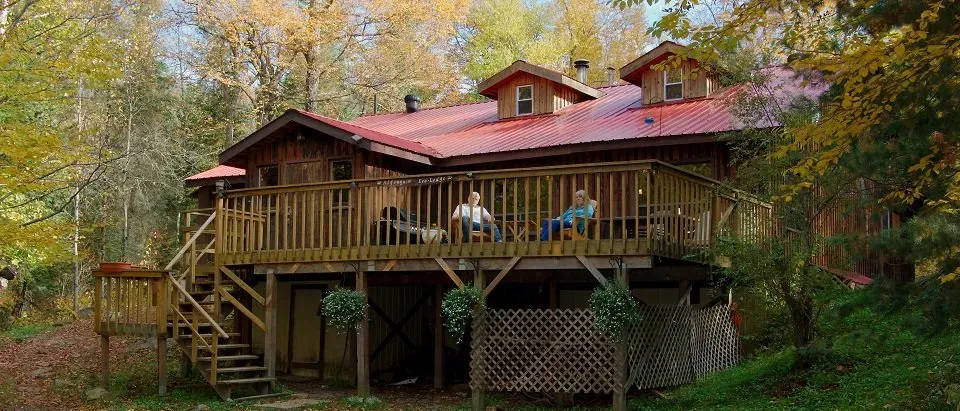
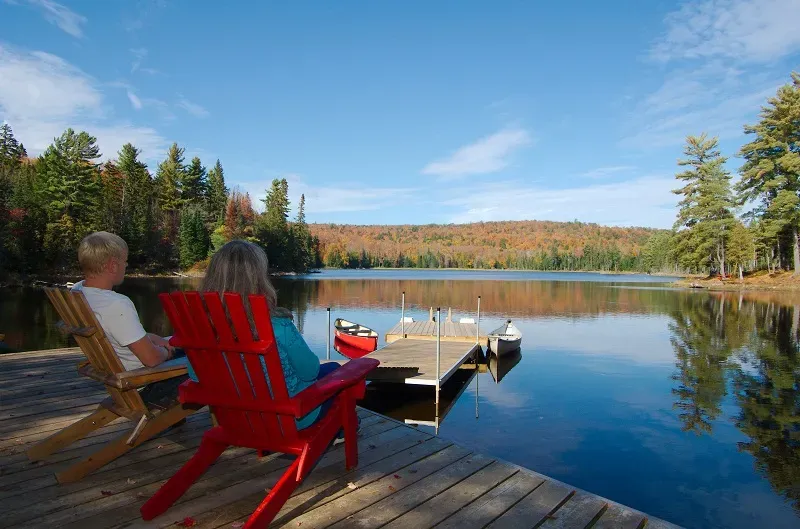
Algonquin Eco-Lodge offers a quiet introduction to learning in a small group setting. Birds are introduced within a broader ecological context through naturalist-led experiences, setting the pace for a slower, more comfortable immersion.
The focus isn’t on the checklist. Rather, it’s on education: observation, listening, and learning where to look. This intimate approach can help build confidence for beginners more effectively than high-volume birding destinations.
The Green Scene
Tucked so deep in Algonquin’s forest that power lines can’t reach it, the lodge runs entirely off-grid on micro-hydro electricity drawn from its own waterfall — enough to light 17 rooms, a wood-fired sauna, and southern Ontario’s only carbon-neutral hot tub. The system trims roughly 7.5 tons of greenhouse gas a year and earned the 2012 Ontario Sustainable Tourism Award. Guests arrive on foot, and small touches like minimal laundry keep the footprint as light as the walk in.
Cape May Bird Observatory
United States · Where beginners actually learn identification
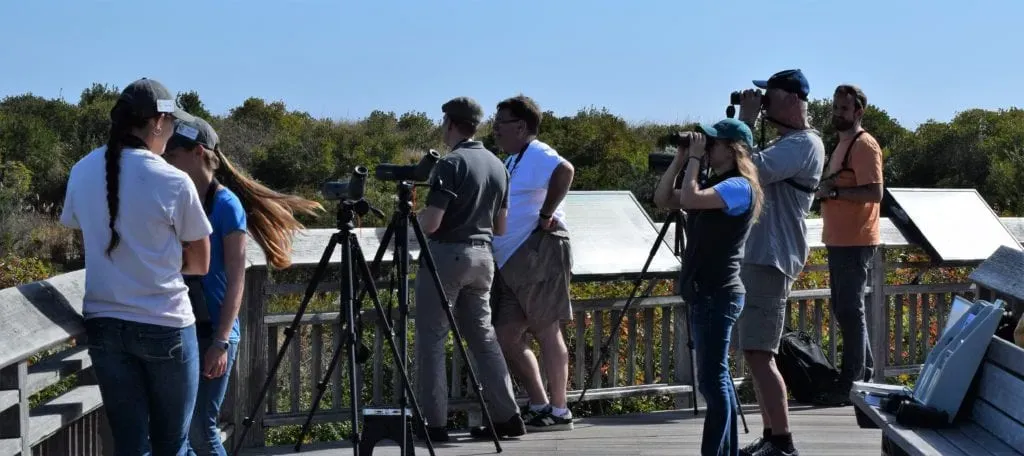
Guided walks, educational programming, and workshops at Cape May focus on building skills in the field. In contrast to passive viewing, clear instruction on how to identify species by shape, behavior, and movement helps visitors learn quickly in a learning-friendly environment.
For new birders, this can be a turning point, moving them from simply seeing birds to recognizing them on their own. Binocular borrowing and the “Birds of Cape May: A Bird Walk for All People,” specifically designed for all skill levels, make it easy for new birders.
The Green Scene
Cape May isn’t a hotel but a working conservation nonprofit, run by New Jersey Audubon since 1976. Every walk, workshop, and membership helps fund some of North America’s longest-running migration counts — of hawks, seabirds, songbirds, and monarchs — that shape how these species are protected. The observatory also trains the next generation of naturalists and has helped drive protections, like limits on horseshoe-crab harvesting, that give imperiled red knots a fighting chance. Here, your visit is the conservation.
Slimbridge Wetland Centre
United Kingdom · Infrastructure that teaches as you go
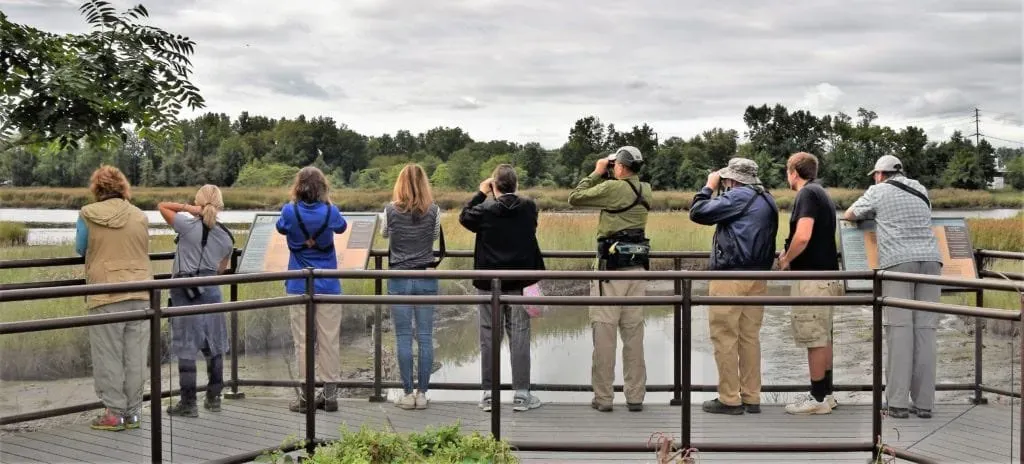
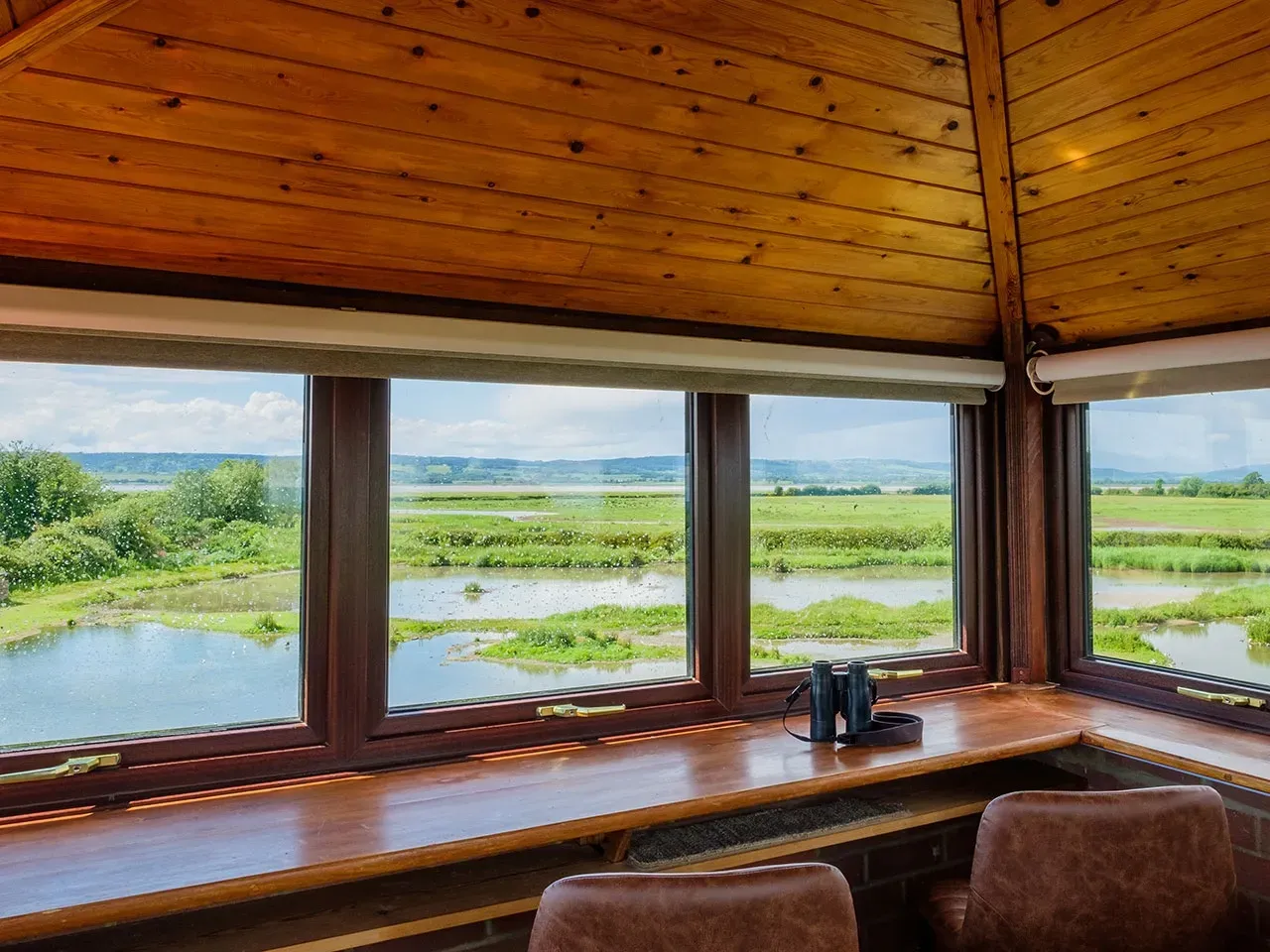
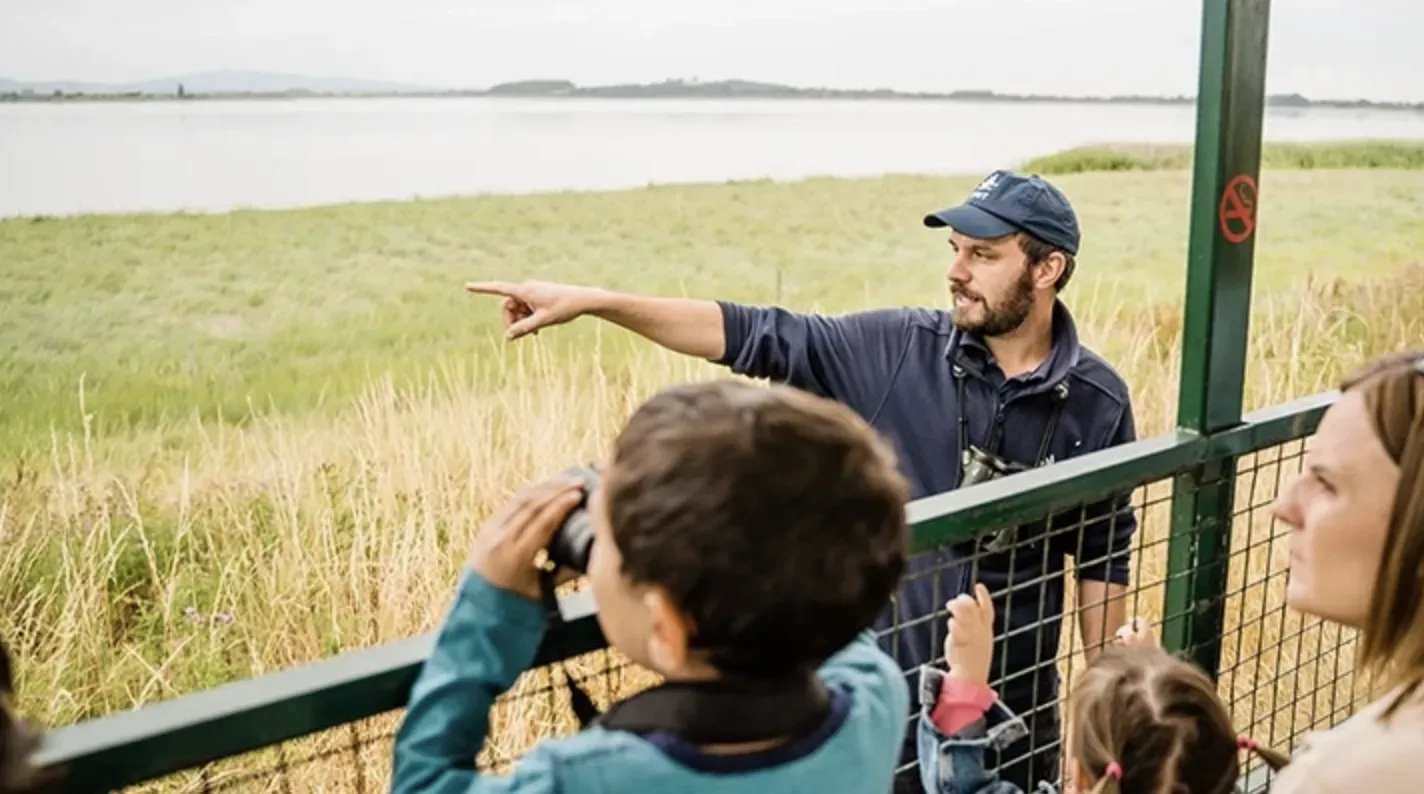
The experiences at Slimbridge are designed with beginners in mind, particularly the guided “Birding for Beginners” sessions. Binocular rentals, hides to observe without intrusion, signage, and staff all add to a structured but natural learning environment.
You can move at your own pace and still leave with a real sense of understanding.
The Green Scene
Opened in 1946 as the world’s first wetland centre by conservationist Sir Peter Scott, Slimbridge is the home of the Wildfowl & Wetlands Trust, the UK’s leading wetland charity. Its reserve holds the highest tiers of protected status, and its captive-breeding work has pulled species back from the edge — most famously the Hawaiian nene goose, revived from about 30 birds to thousands. Admission and membership fund that science, along with free visits that connect thousands of schoolchildren to nature each year.
Canopy Lodge ★ OUR PICK
Visited, vetted, and where our writer would return.
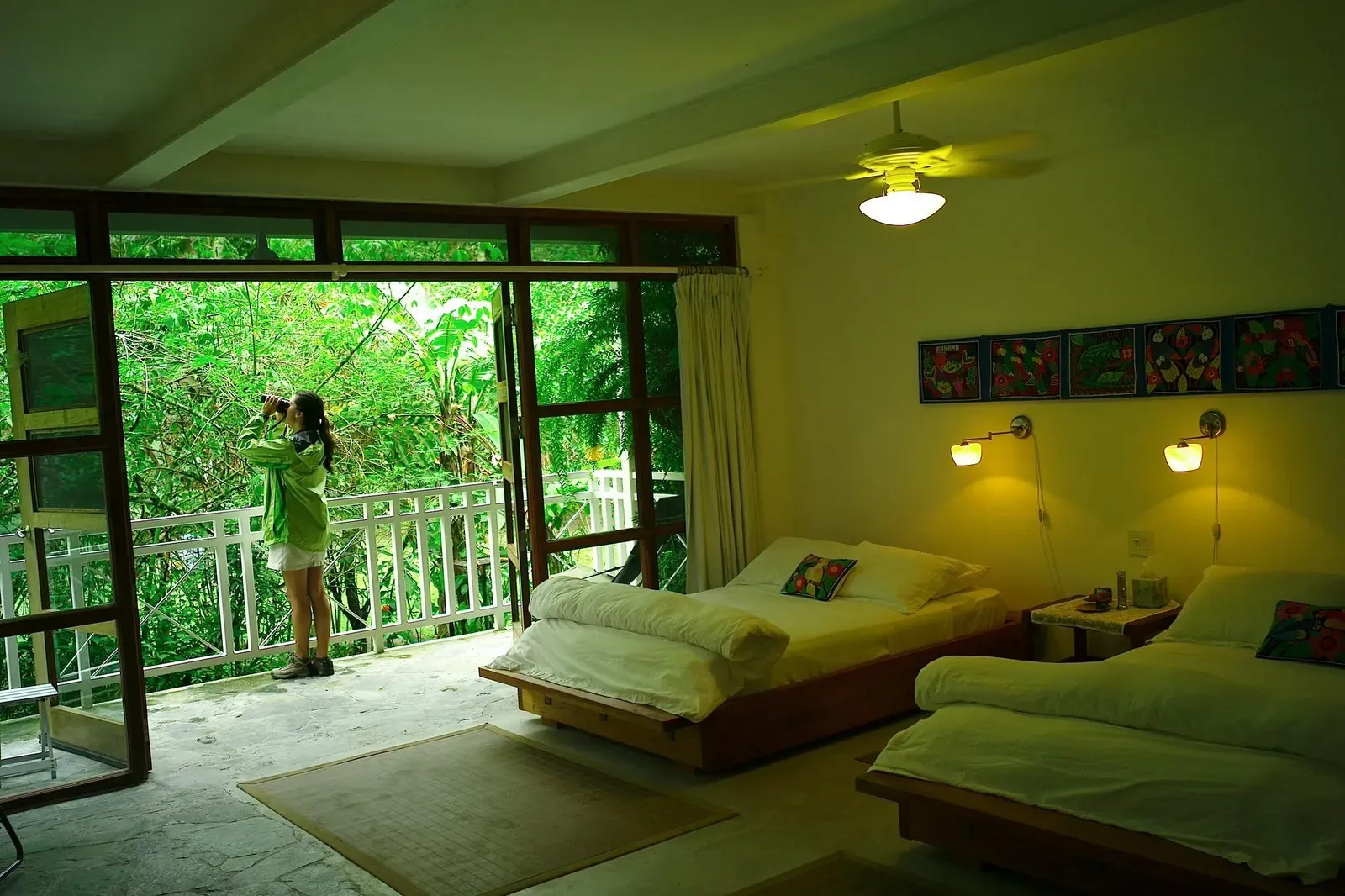
Canopy Lodge stands out for its deliberate approach to supporting learning. On site, feeders make viewing easy, even from within the lodge, as many species can be spotted from the dining area. Additionally, the lodge’s natural history library is equipped with field guides in multiple languages.
It supports self-guided learning while still offering access to expertise when needed, making it easier to see something and quickly figure out what it is.
The Green Scene
Canopy Lodge is the work of a genuine conservationist — founder Raúl Arias de Para also helped create Panama’s Rainforest Discovery Center and leads several of the country’s wildlife organizations. Set beside a stream below the protected Cerro Gaital Natural Monument, the lodge runs on quiet efficiencies: low-flow fixtures, energy-saving lighting, no air-conditioning, refillable bottles, and a library floor upcycled from old Panama Railroad ties. An organic farm supplies the kitchen and a steady income to the local families who guide, cook, and host here.
Mashpi Lodge
Ecuador · Expert-led immersion, designed to be understood
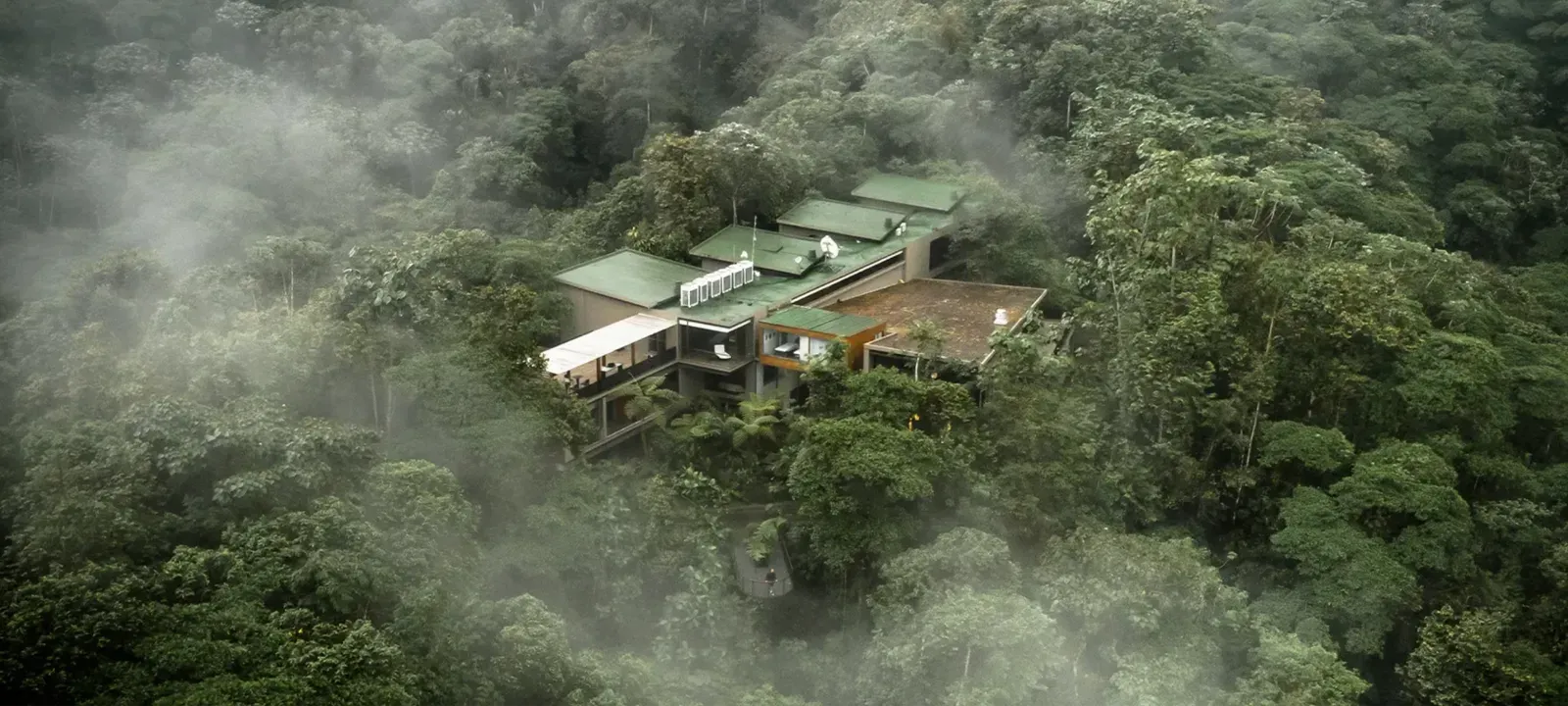
Intentional and thoughtful pacing complement Mashpi’s expert-led excursions. Visitors are immersed in the environment and paired with naturalists trained to break down information, making learning easier rather than overwhelming. Easy, flat trails and observation via the Dragonfly cable or Sky Bike allow for canopy-level viewing.
Beginners are initially guided through the process of noticing. This is then followed up by guides providing just enough detail to help them build recognition and confidence.
The Green Scene
Mashpi began as a rescue mission: in 2001 a former mayor of Quito bought this patch of threatened Chocó cloud forest to protect it, and the lodge — built in 2012 on the footprint of an old sawmill, without felling a tree — now safeguards more than 3,000 hectares while replanting thousands more with native species. An on-site laboratory has described over 20 species new to science, and nearly half the staff come from surrounding communities. Guests effectively fund the research their stay makes possible.
Tinamú Birding Nature Reserve
Colombia · Hands-on learning and close observation
Tinamú removes the most common barrier: not having the right gear or knowledge to begin. Binoculars are available, guidance is constant but informal, and birds are introduced in real time as they appear. On-site feeders bring birds close and consistently, allowing for a relaxing experience.
An ideal location for a first exposure. A visit here feels less like a lesson and more like being shown around by someone who knows what to look for — arguably the most effective way to start.
The Green Scene
Tinamú is proof that worn-out land can come back. Over four decades the Londoño Jaramillo family let a spent coffee farm regrow into native forest — now a registered private nature reserve and a green island in a sea of farmland, sheltering more than 270 bird species. The family plants native trees, monitors wildlife, and channels proceeds from its organic Café de las Aves straight back into feeding the birds. Free nature workshops for local children make conservation something the whole village shares.
Nibela Lake Lodge
South Africa · High diversity, made approachable
Nibela offers high diversity while remaining one of the most accessible introductions to African birdlife. Birds are brought into clear view, often repeatedly, through guided walks and boat excursions. This makes recognition stick more easily. It’s easy to spot great variety from the lodge decks or balconies, and the compact area allows beginners to see a high volume of birds along well-maintained trails.
Guides provide context in real time as birds are encountered naturally. It’s structured without feeling regimented, providing a rare balance between richness and clarity for those new to birding.
The Green Scene
Nibela sits inside iSimangaliso Wetland Park — South Africa’s first UNESCO World Heritage Site and a wetland of global importance. Its eleven thatched chalets stand on raised timber walkways that hover above the rare, ancient sand forest, leaving the fragile floor and its birdlife undisturbed. The lodge is woven into the neighboring KwaNibela community: local guides lead the way, and a share of every village tour flows back into community development projects, so the wilderness and the people beside it can thrive together.
Satpura Tiger Reserve Lodges
India · An indirect but effective entry point
Not everyone wants a strictly birding-focused trip. In Satpura, birding is introduced through broader wildlife experiences within multiple lodges, with guides pointing out species at the lodge, along the Tawa river, and on walking safaris.
This low-pressure exposure often works better than formal instruction. You begin noticing patterns, calls, colors, and behaviors, without ever feeling like you’re “learning birding.”
The Green Scene
Satpura is one of the only Indian reserves you can explore on foot and by canoe, and Reni Pani, its flagship lodge, was the first to introduce those low-impact safaris here. Founded by a local naturalist and built from indigenous materials with no perimeter fence, it lets leopards and sloth bears wander freely through the grounds. Its deeper work is human: training villagers as naturalists and creating tourism livelihoods that ease the community’s reliance on the forest, in close step with the reserve’s rangers.
The Bottom Line
The best birding lodges don’t just offer access — they remove friction. For first-time birders, that difference is everything.
In the right environment, observation comes first and understanding follows. With the right support, birding shifts from something technical to something instinctive.
Once that happens, the rest follows naturally.
What to Bring
A lodge prepared for beginners will likely equip you better than you could on your own. Still, a few small things help:
- A notebook or notes app for names and moments that stick
- A simple ID tool like Merlin Bird ID to reinforce what you see and hear
- Curiosity, presence, and patience — recognition comes faster than you expect
5 Signs You Picked the Right Lodge (even if you’ve never birded before)
- You’re handed binoculars before you think to ask
- You see your first bird within minutes of arriving
- Someone tells you what it is and how you can remember it
- There’s a book nearby that helps you confirm it
- You never feel rushed, lost, or out of place
If all five of these happen, you’ve chosen well. Happy birding!
Frequently Asked Questions
I’m a complete beginner — are these lodges really right for me?
Yes. Each place on this list is chosen specifically because it slows the pace, explains what you’re seeing, and treats “not knowing” as normal, not as a problem.
Do I need my own binoculars or field guide to visit these lodges and reserves?
You don’t have to arrive fully kitted out; many of these spots lend binoculars, offer scopes, and keep field guides or small libraries on hand so you can learn as you go.
What makes these destinations better for new birders than just going to a famous hotspot?
Instead of chasing long species lists at high speed, they prioritize clear views, repetition, and explanation, which helps you actually recognize birds rather than just tick names off a board.
Is there a “best” time of year to visit beginner-friendly bird lodges?
Birding is good year-round in many of these locations, but spring and autumn migrations, or local breeding seasons, often give beginners more visible activity and vocal birds to learn from.
Do I need to be very fit or able to hike long distances to enjoy these places?
Not necessarily; several lodges offer flat boardwalks, hides, decks, drives, and close-up feeders so you can see a lot without tackling strenuous trails.
Eco FAQs
Are these beginner lodges also good choices from a conservation perspective?
Yes. They pair supportive teaching with habitat protection, local guides, and nature-positive operations so your first birding trip also supports the places and communities you’re visiting.
Do these lodges work with local guides or conservation organizations?
Many partner with local naturalists, bird clubs, and conservation groups, so the people leading your walks are rooted in the ecosystem and your visit helps sustain that expertise.
How do feeder-heavy places like Tinamú or Canopy Lodge avoid harming birds?
Thoughtful feeder setups use appropriate food, hygiene, and spacing to bring forest birds into view while still maintaining natural habitat, trails, and native vegetation around the lodge.
What are some small ways I can be a more responsible birder at these lodges?
Follow the lodge’s guidelines, keep a respectful distance from birds, stay on paths, keep noise low in hides, avoid playback unless endorsed by guides, and use refillable bottles rather than single-use plastics.
Do these lodges align with global sustainable tourism principles, even if they aren’t all formally certified?
Many follow best practices that mirror GSTC-style standards — protecting habitats, hiring locally, educating guests, and managing resources carefully — even when they emphasize on-the-ground impact over badges.
Most Popular Posts